
Introduction
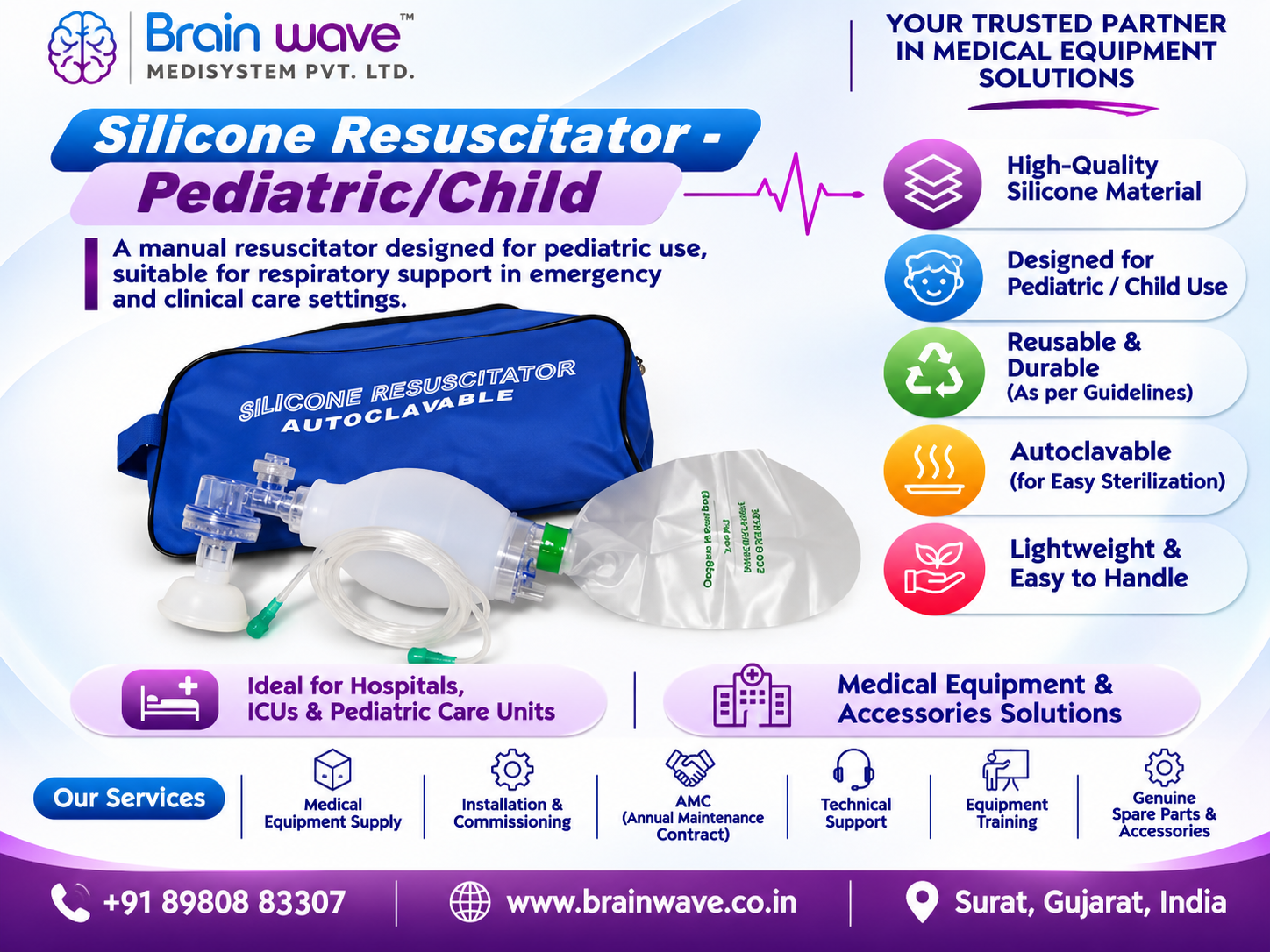
The Silicone Resuscitator Pediatric Child is a manual respiratory support device intended for paediatric emergency care. It is designed to help trained healthcare professionals provide manual ventilation when a child requires respiratory assistance. This type of equipment is commonly associated with emergency departments, hospitals, intensive care units and other clinical environments where respiratory support equipment is maintained.
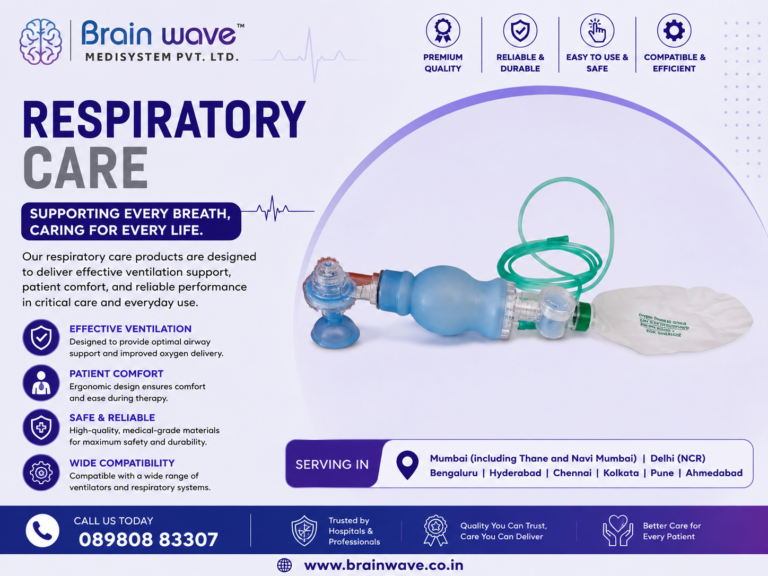
A manual resuscitator generally consists of a self-inflating bag, patient valve and patient interface. When operated by a trained professional, the device is used to deliver manually controlled breaths according to the patient’s needs and established clinical protocols.
Choosing the correct paediatric resuscitator is important. Child and adult devices may differ in design, capacity, accessories and intended patient category. Healthcare facilities should confirm the product specifications, patient suitability and compatibility of all components before purchasing.
Brainwave Medisystem Pvt. Ltd., based in Surat, Gujarat, India, supplies medical equipment and accessories to healthcare facilities. The company also provides equipment installation and commissioning, Annual Maintenance Contract (AMC) support, technical assistance, equipment training and spare parts support.
What Is a Silicone Resuscitator Pediatric Child?
A Silicone Resuscitator Pediatric Child is a manual resuscitation device intended for use with paediatric patients. It is designed to support manual ventilation by allowing a trained healthcare professional to deliver air or an appropriate oxygen-enriched gas mixture through a compatible patient interface.
Silicone is used in some resuscitator designs for components such as the ventilation bag. The exact material composition of the complete device can vary, so the product label and manufacturer documentation should be checked.
A paediatric resuscitator is different from an adult resuscitator because the intended patient category and product configuration may vary. Selecting the correct model is important for ensuring that the equipment matches the clinical application.
Depending on the specific model, a resuscitator may be supplied with accessories such as a patient mask, oxygen reservoir, oxygen tubing and carrying case. These items should not be assumed to be included unless they are listed in the product specifications.
How Does a Manual Silicone Resuscitator Work?
A manual resuscitator is designed to provide ventilation through manual operation. The healthcare professional uses the device according to the patient’s condition, training and clinical protocol.
A typical manual resuscitator assembly may contain the following components:
- Self-inflating bag: The manually operated component used to deliver a breath.
- Patient valve: Directs gas towards the patient interface and manages the flow path.
- Patient mask or connector: Provides the connection between the device and the patient.
- Oxygen inlet: Available on applicable models for connection to an oxygen source.
- Oxygen reservoir: Included in certain configurations to support oxygen delivery when used as specified.
- Connecting accessories: Tubing and other components supplied according to the product design.
The actual design and included components vary by manufacturer and model. Always refer to the product instructions for the correct assembly and operation.
Why Is a Pediatric Resuscitator Important?
Paediatric respiratory care requires equipment selected for the intended patient group. A suitable manual resuscitator is one of the emergency respiratory support devices that healthcare facilities may keep available.
Intended for Child Patients
A paediatric resuscitator is designed for a child patient category. Healthcare professionals should confirm the approved patient range and product specifications before use.
Supports Manual Ventilation
The device is intended to provide manual ventilation when required by trained healthcare professionals and in accordance with clinical protocols.
Useful in Emergency Care Settings
Manual resuscitators may be maintained in emergency departments, intensive care units, operating areas and other clinical locations where respiratory support equipment is required.
Can Form Part of Emergency Equipment Inventory
Hospitals and healthcare facilities often maintain respiratory support devices as part of their emergency equipment inventory. Appropriate product identification and regular inspection are important.
Key Features to Check Before Purchasing a Silicone Resuscitator
The exact features of a silicone resuscitator depend on its manufacturer and model. Before ordering a paediatric device, healthcare facilities should verify the following details.
1. Patient Category
Confirm that the resuscitator is intended for paediatric or child use. Do not select a device based only on its appearance.
2. Bag Capacity
Check the stated bag capacity in the product documentation. Do not assume that every paediatric resuscitator has the same volume.
3. Material
Verify which components are made from silicone and whether other materials are used in the assembly. The material description should match the actual product specification.
4. Patient Valve
Check the patient valve design and its compatibility with the supplied patient interface and other components.
5. Mask Size
If a mask is included, confirm its size and intended patient category. Mask selection should follow the manufacturer’s guidance and clinical requirements.
6. Oxygen Reservoir
Check whether an oxygen reservoir is included or available as an accessory. Confirm the intended configuration from the product documentation.
7. Reprocessing Requirements
Verify whether the device is reusable and which cleaning, disinfection or sterilisation methods are approved. Do not assume that all silicone resuscitators support the same reprocessing procedure.
8. Product Reference
Record the exact product model or part number. This helps when ordering replacements or checking compatibility with accessories.
Applications of a Pediatric Silicone Resuscitator
A paediatric manual resuscitator may be maintained in different healthcare environments where emergency respiratory equipment is required.
Hospital Emergency Departments
Emergency departments maintain respiratory support equipment for situations in which immediate assessment and intervention may be necessary. A suitable paediatric resuscitator may form part of the emergency equipment inventory.
Paediatric Intensive Care Units
Paediatric intensive care units provide specialised care for children who require close monitoring and medical support. Manual resuscitation equipment may be available as part of the unit’s emergency preparedness.
Operation Theatres
Operation theatres use different types of respiratory and patient monitoring equipment. A paediatric resuscitator may be maintained for emergency situations according to hospital protocols.
Paediatric Wards
Hospitals may keep appropriate emergency respiratory equipment in designated clinical areas. The selection should reflect the patient category and facility requirements.
Ambulances and Emergency Response Services
Some emergency response services maintain manual resuscitation devices for paediatric patients. Equipment selection, storage and readiness should follow the service’s approved protocols.
The use of a particular resuscitator must always follow its intended purpose, manufacturer’s instructions and the clinical protocols of the healthcare facility.
Silicone Resuscitator vs Other Resuscitator Materials
Manual resuscitators are available in different materials and configurations. Silicone is one of the materials used in reusable resuscitator designs.
When comparing products, healthcare facilities should consider more than the material alone.
Material and Construction
Check the material used for the bag, valve, mask and other components. Different parts of the same device may use different materials.
Reusable or Disposable Design
Some resuscitators are designed for reuse under specified reprocessing procedures, while others are intended for single use. The product label must clearly establish the intended use.
Maintenance Requirements
Reusable products require inspection and approved reprocessing. The maintenance procedure may differ depending on the model and material.
Product Specifications
Compare the bag capacity, patient category, valve arrangement, mask configuration and accessories. These details are more useful than relying only on a general product description.
How to Select the Correct Pediatric Resuscitator
Before purchasing a paediatric resuscitator, healthcare facilities should check the product requirements carefully.
Step 1: Confirm the Patient Category
Identify whether the device is intended for paediatric or child use. Check the manufacturer’s stated patient range.
Step 2: Check the Product Reference
Record the model number or product reference. This is useful when comparing the required product with a replacement.
Step 3: Verify Bag Capacity
Check the manufacturer’s stated bag capacity and intended patient category. Avoid assuming that all paediatric devices have identical specifications.
Step 4: Review the Valve Configuration
Confirm the patient valve design and the required connections.
Step 5: Check Included Accessories
Ask whether the product includes a mask, oxygen reservoir, oxygen tubing or other accessories. Confirm the sizes and quantities supplied.
Step 6: Confirm Reprocessing Requirements
If the device is reusable, review the approved cleaning, disinfection and sterilisation instructions.
Step 7: Check Regulatory and Product Documentation
Review the product label, manufacturer information and applicable documentation before procurement.
Proper Handling, Inspection and Maintenance
Resuscitation equipment must be kept in a suitable condition so that it can be assessed and prepared according to hospital procedures when required.
Inspect the Bag
Check the bag for visible cracks, damage, deformation or signs of deterioration. Do not use a damaged component.
Check the Patient Valve
Inspect the valve and its connections according to the manufacturer’s instructions. A damaged or incorrectly assembled valve can affect device operation.
Inspect the Mask and Connectors
Check the mask, patient connector and other supplied components for damage, loose connections or defects.
Follow Approved Reprocessing Instructions
For reusable devices, follow the exact cleaning, disinfection and sterilisation instructions supplied by the manufacturer. Do not assume that every silicone product can be processed using the same method.
Check Accessories
Inspect the oxygen reservoir and tubing, where included, according to the product documentation.
Maintain Inspection Records
Healthcare facilities can maintain records of equipment inspections, reprocessing and replacement. These records help biomedical teams manage emergency equipment.
Follow Hospital Readiness Procedures
Resuscitation devices should be checked and maintained according to the healthcare facility’s approved emergency equipment procedures. Only trained personnel should assess and operate the device.
Common Mistakes to Avoid When Purchasing a Pediatric Resuscitator
Healthcare facilities should avoid these common purchasing and maintenance mistakes:
- Selecting an adult resuscitator instead of a paediatric model.
- Ignoring the manufacturer’s stated patient range.
- Assuming every silicone resuscitator has the same bag capacity.
- Ordering without checking the patient valve configuration.
- Assuming a mask and oxygen reservoir are included.
- Confusing reusable and disposable products.
- Using unapproved cleaning or sterilisation methods.
- Ignoring product inspection and maintenance requirements.
- Purchasing without checking the model number and product documentation.
Verifying these details before ordering helps healthcare facilities identify a product that matches their equipment requirements.
Why Choose Brainwave Medisystem Pvt. Ltd.?
Brainwave Medisystem Pvt. Ltd. is a medical equipment and accessories supplier based in Surat, Gujarat, India. The company supports healthcare facilities with medical equipment requirements and related technical services.
For enquiries about a Silicone Resuscitator Pediatric Child, customers can contact Brainwave Medisystem to discuss the required patient category, product configuration and accessory details.
The company’s services include:
- Medical equipment supply.
- Equipment installation and commissioning.
- Annual Maintenance Contract (AMC) support.
- Technical assistance.
- Equipment training.
- Genuine spare parts and accessories.
Brainwave Medisystem aims to support hospitals and healthcare organisations with medical equipment solutions and related assistance.
Frequently Asked Questions
1. What is a Silicone Resuscitator Pediatric Child?
It is a manual resuscitation device intended for paediatric patients. It is designed to provide manual ventilation when used by trained healthcare professionals according to clinical protocols.
2. What is the purpose of a silicone resuscitator?
A manual resuscitator is designed to support manual ventilation. The device is used by trained personnel in accordance with its instructions and the patient’s clinical requirements.
3. Is a paediatric resuscitator different from an adult resuscitator?
Yes. The patient category and product specifications can differ. Always check the manufacturer’s stated patient range and bag capacity before selecting a device.
4. Does a silicone resuscitator come with a mask?
This depends on the product configuration. Confirm whether the mask is included and check its size and intended patient category before ordering.
5. Does every paediatric resuscitator include an oxygen reservoir?
No. The supplied accessories vary by product. Check the product description and package contents with the supplier.
6. Is a silicone resuscitator reusable?
Some silicone resuscitators are designed for reuse, but the exact model must be checked. Follow the manufacturer’s approved cleaning, disinfection and sterilisation instructions.
7. How should a paediatric resuscitator be maintained?
Inspect the bag, valve, mask and connectors according to the manufacturer’s instructions. Follow the approved reprocessing requirements and the healthcare facility’s equipment readiness procedures.
8. Who should operate a manual resuscitator?
It should be operated by appropriately trained healthcare professionals following clinical protocols and the manufacturer’s instructions.
9. Where can I enquire about a pediatric silicone resuscitator in India?
You can contact Brainwave Medisystem Pvt. Ltd. in Surat, Gujarat, for product enquiries and assistance with medical equipment accessories.
Conclusion
The Silicone Resuscitator Pediatric Child is a manual respiratory support device intended for paediatric emergency care applications. Selecting the correct product requires checking the patient category, bag capacity, valve configuration, mask size, accessories and approved reprocessing requirements.
Healthcare facilities should verify the product documentation before purchasing and maintain the device according to the manufacturer’s instructions. Proper inspection and equipment readiness procedures are important for emergency medical equipment.
Brainwave Medisystem Pvt. Ltd. supports healthcare facilities with medical equipment, accessories and related technical services from Surat, Gujarat, India.
Contact Brainwave Medisystem Pvt. Ltd.
Company: Brainwave Medisystem Pvt. Ltd.
Location: Surat, Gujarat, India
Phone: +91 89808 83307
Website: https://brainwave.co.in/
For enquiries about the Silicone Resuscitator Pediatric Child and other medical equipment accessories, contact the Brainwave Medisystem team.