
Introduction
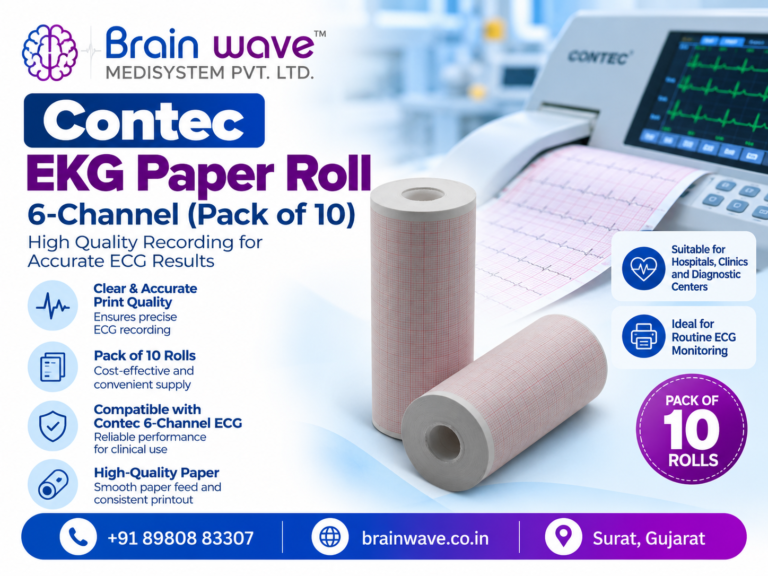
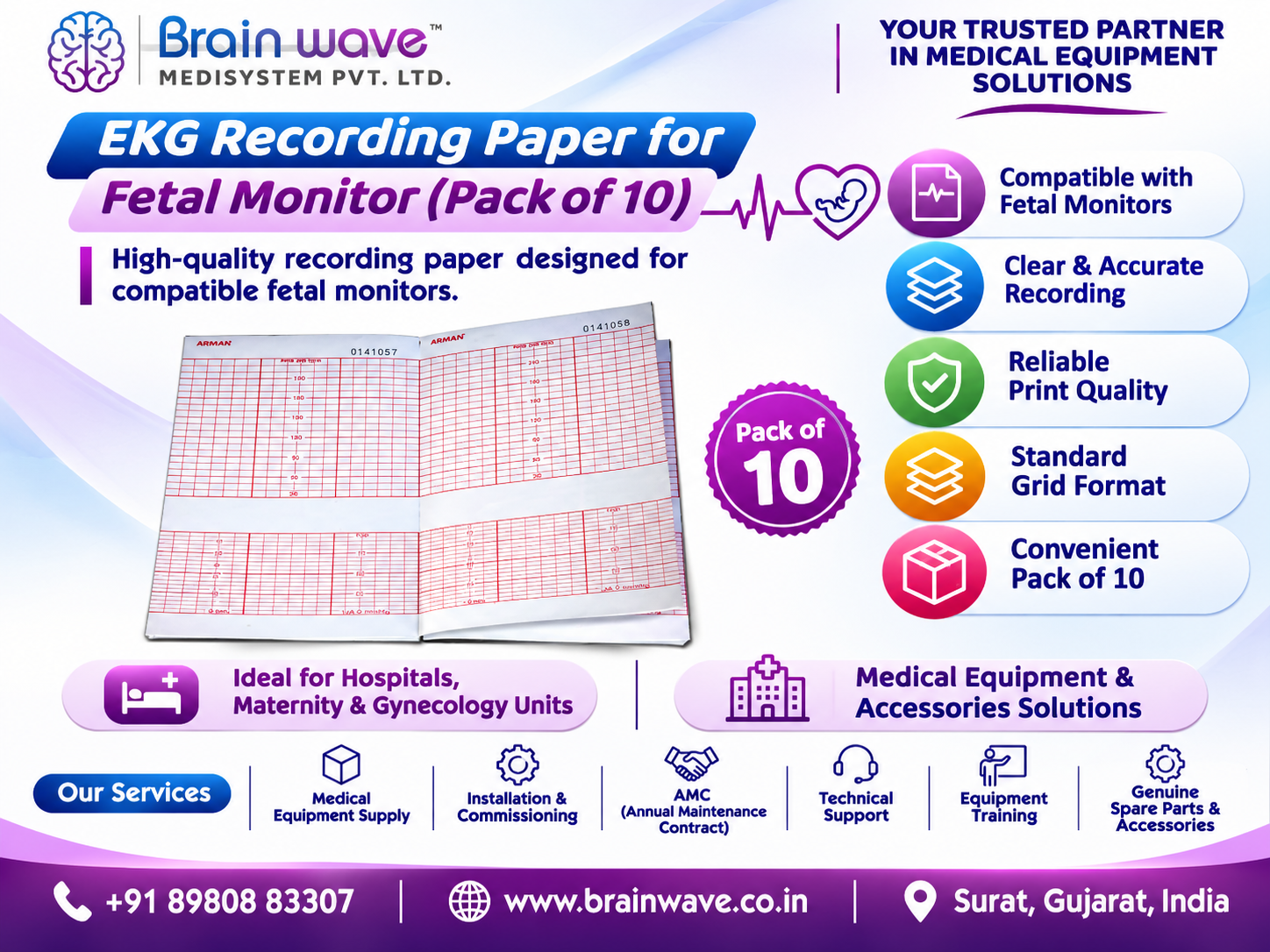
The EKG Recording Paper for Fetal Monitor Pack of 10 is a medical consumable used with compatible fetal monitoring equipment. Fetal monitors record information such as fetal heart rate and uterine activity, depending on the monitor’s capabilities and configuration. Recording paper allows the equipment to produce a printed record for clinical review and documentation.
In maternity hospitals, labour rooms and obstetric departments, fetal monitoring equipment is used as part of patient care. Having the correct recording paper available is important for facilities that use paper-based printing as part of their monitoring workflow.
However, recording paper is not universal. Different fetal monitor models may require different paper dimensions, folding styles, grid layouts and paper references. Healthcare facilities should verify the exact monitor model and paper specifications before purchasing a replacement.
Brainwave Medisystem Pvt. Ltd., based in Surat, Gujarat, India, supplies medical equipment and accessories to healthcare facilities. The company also supports customers with equipment installation and commissioning, Annual Maintenance Contract (AMC) support, technical assistance, equipment training and spare parts.
What Is EKG Recording Paper for a Fetal Monitor?
EKG recording paper for a fetal monitor is a specialised paper consumable used by compatible monitoring equipment to print recorded monitoring information.
Fetal monitoring equipment may use cardiotocography (CTG) to record fetal heart rate and uterine activity over a period of time. Depending on the monitor model, the printed output may include traces, scales, time markings and other information used by healthcare professionals.
The paper is designed to work with a particular printer mechanism and monitor configuration. Its dimensions, grid layout and feed arrangement must match the equipment requirements.
The product discussed in this article is listed as EKG Recording Paper for Fetal Monitor (Pack of 10). The exact paper size, number of sheets or rolls per pack, grid format and compatible monitor models should be confirmed from the product label or supplier before ordering.
Why Is Recording Paper Important in Fetal Monitoring?
Fetal monitoring equipment is used in maternity care to record relevant information during pregnancy and labour, according to clinical requirements.
When a monitor uses a paper printer, recording paper is needed to produce a physical trace. This printed record can form part of the clinical documentation maintained by the healthcare facility.
Printed Monitoring Records
Compatible recording paper allows the fetal monitor to print the information it has recorded. The resulting trace can be reviewed by qualified healthcare professionals.
Clinical Documentation
Printed records may be maintained as part of a patient’s medical documentation according to hospital policies and clinical requirements.
Review of Monitoring Information
A correctly printed trace provides a paper-based representation of the information recorded by the monitoring equipment. The interpretation of that information must be performed by qualified clinical staff.
Consumable Inventory Management
Recording paper is a consumable. Hospitals that use paper-based fetal monitoring systems may need to maintain suitable stock for routine operations.
Understanding Fetal Monitoring and CTG Recording
Cardiotocography, commonly called CTG, is a monitoring method used in maternity care. It generally records fetal heart rate and uterine activity over time.
A compatible fetal monitor processes the signals from its sensors and displays or records the information according to the device’s design.
A paper-based fetal monitoring setup may include:
- A compatible fetal monitor.
- The appropriate fetal monitoring sensors.
- A compatible paper printer.
- The specified recording paper.
- The required equipment settings and recording configuration.
The printed result depends on the monitor model, printer settings, paper type and recording configuration.
It is important to distinguish between fetal monitor recording paper and ordinary office printing paper. The required product must match the equipment’s paper feed and recording format.
Key Details to Check Before Purchasing Fetal Monitor Paper
Before ordering EKG Recording Paper for Fetal Monitor Pack of 10, healthcare facilities should confirm the product details.
1. Fetal Monitor Brand and Model
Identify the exact manufacturer and model number of the fetal monitor. Paper compatibility can vary between different models, even within the same brand.
2. Paper Dimensions
Check the required paper width, length and format. The dimensions must match the printer compartment and paper feed mechanism.
3. Paper Format
Fetal monitors may use different paper formats, including rolls or folded paper. Confirm the required format before ordering.
4. Grid and Printing Layout
Some fetal monitor papers include printed grids or scales used for displaying recorded traces. The grid layout must match the monitor’s recording requirements.
5. Product Reference
Check the paper reference or part number on the existing packaging. This is useful when sourcing a replacement.
6. Pack Quantity
The supplied topic identifies the product as a pack of 10. Confirm whether the package contains ten rolls, ten packs or another defined unit according to the supplier’s product description.
7. Printer Compatibility
Confirm that the paper is designed for the printer mechanism installed in the fetal monitor. Do not select paper based only on its appearance or approximate dimensions.
Where Is Fetal Monitor Recording Paper Used?
Fetal monitor recording paper may be required in healthcare facilities that use compatible paper-printing fetal monitoring systems.
Maternity Hospitals
Maternity hospitals use fetal monitoring equipment as part of obstetric care. Suitable paper may be required for printing monitoring records.
Labour and Delivery Rooms
Labour rooms may use fetal monitors to record information during labour according to clinical protocols. Recording paper supports the paper-printing function of compatible devices.
Obstetric Departments
Obstetric departments may maintain fetal monitoring equipment and its related consumables as part of their routine inventory.
Nursing Homes with Maternity Services
Healthcare facilities providing maternity services may require suitable fetal monitor paper when their equipment uses a paper printer.
Diagnostic and Clinical Centres
Centres that provide relevant maternal monitoring services may also use compatible fetal monitoring accessories and consumables.
The actual use depends on the facility’s equipment and clinical workflow.
Benefits of Keeping Compatible Fetal Monitor Paper Available
Maintaining the correct recording paper inventory can support the routine operation of paper-based fetal monitoring systems.
Supports Printing Requirements
Suitable recording paper allows compatible fetal monitors to produce printed records through their built-in or connected printer.
Helps Maintain Routine Workflows
Keeping the required consumable available can help facilities avoid delays caused by a shortage of compatible paper.
Supports Paper-Based Documentation
Printed monitoring traces may be retained according to the healthcare facility’s documentation procedures.
Helps With Procurement Planning
Recording the paper reference, dimensions and pack quantity helps procurement teams reorder the correct consumable.
Reduces Compatibility Errors
Checking the monitor model and paper specifications before purchasing helps reduce the risk of ordering unsuitable paper.
How to Identify the Correct Fetal Monitor Recording Paper
Selecting the correct paper requires checking the existing equipment and consumable details.
Step 1: Identify the Monitor Model
Record the brand and exact model number of the fetal monitor.
Step 2: Check the Existing Paper
Look at the label on the current paper packaging. Note the product reference, dimensions and paper format.
Step 3: Verify the Printer Type
Check whether the monitor uses roll paper, folded paper or another recording format.
Step 4: Confirm the Grid Layout
If the existing paper has a printed grid, compare its layout with the paper required by the equipment.
Step 5: Confirm Pack Contents
Verify the number of rolls or sheets included in the pack of 10.
Step 6: Ask for Compatibility Confirmation
Share the monitor model and a photograph of the existing paper with the supplier if the reference is unclear.
These checks can help healthcare facilities identify the correct recording paper for their equipment.
Proper Storage and Handling of Fetal Monitor Paper
Recording paper should be stored and handled carefully to help preserve its condition.
Keep Paper Dry
Store the paper in a dry location. Moisture can affect paper quality and may interfere with printing.
Avoid Direct Sunlight and Excessive Heat
Follow the storage conditions stated by the paper manufacturer. Avoid unnecessary exposure to heat, sunlight and other conditions that may affect the paper.
Protect the Printed Surface
If the paper includes a pre-printed grid, avoid rubbing or damaging the surface before use.
Store in Original Packaging
Keep unused paper in its original packaging where practical. This can help protect it from dust and environmental exposure.
Check Before Loading
Inspect the paper for damage, creases or other defects before placing it in the monitor printer.
Follow Printer Instructions
Load the paper according to the fetal monitor manufacturer’s instructions. Incorrect loading can affect paper feeding and printing.
Common Mistakes to Avoid When Purchasing Fetal Monitor Paper
Healthcare facilities should avoid these common purchasing mistakes:
- Ordering paper without checking the fetal monitor model.
- Assuming all fetal monitors use the same paper dimensions.
- Confusing roll paper with folded recording paper.
- Ignoring the printer mechanism.
- Selecting paper with an unsuitable grid layout.
- Assuming that every pack of 10 contains the same quantity or format.
- Ordering without checking the existing paper reference.
- Storing paper in unsuitable environmental conditions.
Confirming the paper reference and monitor compatibility before ordering can help avoid unnecessary procurement errors.
Why Choose Brainwave Medisystem Pvt. Ltd.?
Brainwave Medisystem Pvt. Ltd. is a medical equipment and accessories supplier based in Surat, Gujarat, India. The company supports healthcare facilities with medical equipment requirements, consumables and related technical services.
For enquiries about EKG Recording Paper for Fetal Monitor Pack of 10, customers can contact Brainwave Medisystem to discuss the required paper reference, pack quantity and equipment compatibility.
The company’s services include:
- Medical equipment supply.
- Equipment installation and commissioning.
- Annual Maintenance Contract (AMC) support.
- Technical assistance.
- Equipment training.
- Genuine spare parts and accessories.
Brainwave Medisystem aims to support hospitals and healthcare organisations with medical equipment solutions and related assistance.
Frequently Asked Questions
1. What is EKG recording paper for a fetal monitor?
It is a specialised paper consumable used by compatible fetal monitoring equipment to print recorded information, such as fetal heart rate and uterine activity traces.
2. What is CTG recording paper?
CTG recording paper is used by compatible cardiotocography equipment to print monitoring traces. The paper format and dimensions depend on the monitor model.
3. Is fetal monitor recording paper universal?
No. Different fetal monitor models may require different paper sizes, formats, grid layouts and product references.
4. What does Pack of 10 mean?
The product title identifies a pack quantity of 10. Confirm whether this refers to ten rolls, ten packs or another unit from the product packaging details before ordering.
5. How do I identify the correct recording paper?
Check the fetal monitor brand and model, existing paper reference, dimensions, paper format and printer requirements.
6. Can ordinary printer paper be used in a fetal monitor?
Do not substitute ordinary office paper for specialised recording paper unless the equipment manufacturer specifically approves it. The paper must match the monitor’s printer requirements.
7. How should fetal monitor paper be stored?
Keep it in its original packaging where practical and follow the manufacturer’s storage instructions. Protect it from moisture, excessive heat, direct sunlight and physical damage.
8. Why is paper compatibility important?
The correct paper helps the printer feed and record information in the intended format. Unsuitable paper may not fit or print correctly.
9. Where can I enquire about fetal monitor recording paper in India?
You can contact Brainwave Medisystem Pvt. Ltd. in Surat, Gujarat, for product enquiries and assistance with medical equipment consumables.
Conclusion
The EKG Recording Paper for Fetal Monitor Pack of 10 is a consumable intended for compatible fetal monitoring equipment that uses paper-based recording. It supports the printing of monitoring traces used in clinical review and documentation.
Before purchasing, healthcare facilities should verify the fetal monitor model, paper dimensions, format, grid layout, printer requirements and pack contents. Proper storage and handling can also help maintain the paper’s condition.
Brainwave Medisystem Pvt. Ltd. supports healthcare facilities with medical equipment, consumables and related technical services from Surat, Gujarat, India.
Contact Brainwave Medisystem Pvt. Ltd.
Company: Brainwave Medisystem Pvt. Ltd.
Location: Surat, Gujarat, India
Phone: +91 89808 83307
Website: https://brainwave.co.in/
For enquiries about EKG Recording Paper for Fetal Monitor Pack of 10 and other medical equipment accessories, contact the Brainwave Medisystem team.