
Introduction to the Silicone Resuscitator for Adults
A Silicone Resuscitator for Adults is an important medical device used in healthcare environments to provide manual ventilation when a patient requires respiratory assistance. It is designed for use by trained healthcare professionals during emergency response, resuscitation procedures, and other clinical situations where assisted ventilation may be necessary. Hospitals, emergency departments, intensive care units, ambulances, and other medical facilities may require appropriate manual resuscitation equipment as part of their respiratory care resources.
Selecting suitable medical equipment is an important responsibility for healthcare institutions. Factors such as product construction, compatibility, ease of handling, cleaning requirements, maintenance instructions, and manufacturer guidance should be considered before purchasing a resuscitator.
Brainwave Medisystem Pvt. Ltd., based in Mumbai, Maharashtra, provides medical equipment supply services to healthcare facilities and medical professionals. Customers looking for a Silicone Resuscitator for Adults in Mumbai can contact the company to enquire about product availability, specifications, and purchasing requirements.
This article explains the purpose of adult silicone resuscitators, their role in clinical environments, important purchasing considerations, and how healthcare organisations can evaluate suitable medical equipment for their requirements.
What Is a Silicone Resuscitator for Adults?
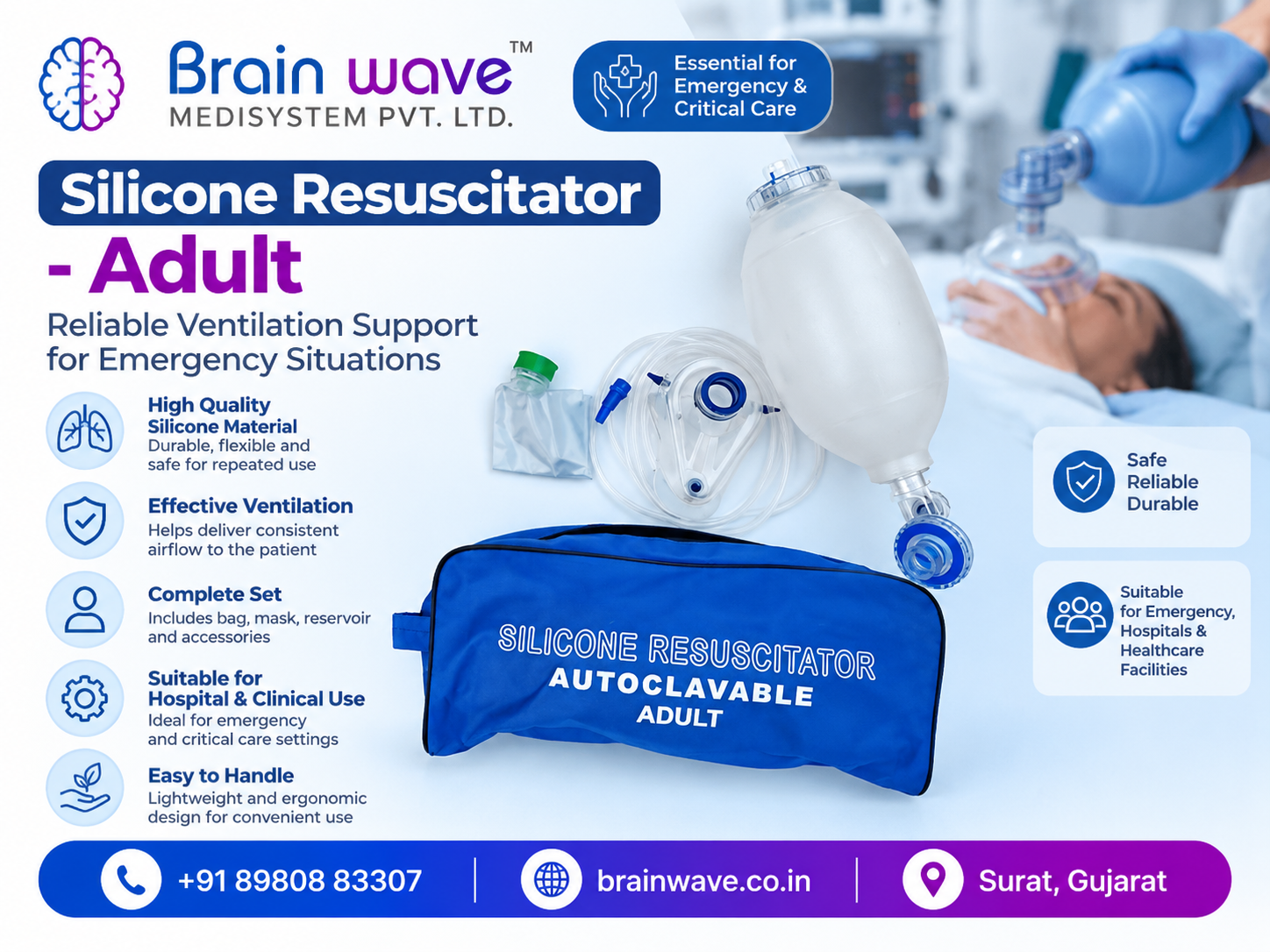
A silicone resuscitator is a manually operated ventilation device intended to assist breathing by delivering air, or an appropriate oxygen-enriched gas mixture when configured for that purpose, to a patient through a suitable mask or airway interface.
Adult models are intended for use with adult patients according to the manufacturer’s specifications. Healthcare professionals use the device by manually operating its self-inflating bag or other designated ventilation mechanism, following appropriate clinical protocols.
The precise construction, included accessories, operating characteristics, and cleaning procedures depend on the specific product model. Buyers should therefore review the manufacturer’s documentation rather than assume that all adult resuscitators have identical features.
Silicone is used in certain medical devices because it can offer flexibility and may be suitable for reusable medical equipment when the product is specifically designed and validated for repeated processing. However, the actual durability, reusability, and cleaning requirements of any resuscitator must be confirmed through its official product documentation.
Before purchasing a Silicone Resuscitator for Adults, healthcare providers should verify that the selected model meets their intended clinical requirements and applicable regulatory standards.
Why Adult Resuscitators Are Important in Healthcare Settings
Respiratory emergencies can occur in different clinical environments, including emergency departments, intensive care units, operating rooms, and prehospital care settings. Appropriate ventilation equipment is an important component of emergency preparedness.
A manual resuscitator allows trained personnel to provide ventilation when clinically indicated. Its use requires appropriate training, patient assessment, correct equipment selection, and adherence to established resuscitation procedures.
Healthcare facilities may consider maintaining suitable resuscitation equipment in designated clinical areas based on their patient population, operational procedures, and emergency preparedness policies.
An adult resuscitator may be considered for several healthcare environments:
- Hospitals: Emergency departments, critical care units, and other designated clinical areas.
- Intensive care units: Areas where respiratory support equipment may be required as part of patient care.
- Emergency response teams: Medical teams that need appropriate manual ventilation equipment.
- Ambulances: Emergency transport services that maintain equipment according to their operational and regulatory requirements.
- Operating rooms: Clinical environments where suitable resuscitation equipment forms part of emergency preparedness.
- Medical training facilities: Institutions that use approved equipment for relevant clinical training and demonstrations.
The exact equipment requirements differ between facilities. Healthcare administrators should consult their clinical teams and follow applicable guidelines when determining which resuscitation devices to procure.
Key Considerations When Selecting a Silicone Resuscitator for Adults
Choosing a medical resuscitation device requires more than comparing product names or prices. Healthcare purchasers should evaluate the intended application, manufacturer specifications, safety documentation, and ongoing maintenance requirements.
1. Material and Construction
The materials used in a resuscitator influence its handling characteristics, cleaning requirements, and suitability for the intended application.
When considering a silicone resuscitator, ask the supplier to confirm the materials used in the bag, patient interface, valves, and other components. Check whether the product is designed for single-patient use or reusable applications.
Do not assume that a silicone component automatically makes an entire device reusable or suitable for every sterilisation method.
2. Adult Patient Compatibility
Confirm that the selected product is specifically intended for adult patients. Review the manufacturer’s stated patient category, ventilation specifications, and any relevant operating limitations.
Healthcare professionals should select and operate the device according to the patient’s needs, professional training, and applicable clinical guidance.
3. Patient Interface and Accessories
A resuscitator may be supplied with a mask, oxygen tubing, reservoir components, or other accessories, depending on the model and package configuration.
Before ordering, verify exactly what is included. Confirm the compatibility of any additional accessories with the selected device and the intended clinical setup.
4. Valve Function and Product Specifications
The ventilation mechanism, valves, connectors, and other functional components should meet the manufacturer’s specifications.
Healthcare facilities should review available product documentation and follow the manufacturer’s instructions for inspection, operation, and maintenance. Any concerns about component condition or functionality should be addressed before the equipment is used clinically.
5. Cleaning and Reprocessing Requirements
Reusable medical devices require appropriate cleaning, disinfection, and, where specified, sterilisation. The correct method depends on the device’s validated design and the manufacturer’s instructions.
Healthcare facilities should establish documented reprocessing procedures and ensure that responsible personnel are appropriately trained. A product should not be exposed to a cleaning agent, temperature, or sterilisation method unless the manufacturer confirms that it is suitable.
6. Manufacturer Documentation
Product documentation helps healthcare professionals understand the device’s intended use, operating procedure, contraindications, limitations, and maintenance requirements.
Purchasers should request the relevant instructions for use, technical specifications, and applicable conformity or regulatory documentation before completing a purchase.
Applications of Adult Silicone Resuscitators
Adult silicone resuscitators are intended for manual ventilation in appropriate clinical situations. Their use depends on the specific product design, the patient’s condition, and the healthcare professional’s assessment.
Emergency Respiratory Support
In an emergency, trained personnel may use an appropriate manual resuscitator to provide ventilation when indicated. The device must be selected and operated according to established clinical protocols.
Hospital Respiratory Care
Hospitals maintain different types of respiratory equipment to support patient care across departments. A suitable adult resuscitator may form part of the equipment available in designated treatment areas.
Critical Care Environments
Intensive care and other critical care units require equipment selected according to their clinical workflows and patient needs. Procurement teams should consult clinical staff when determining the appropriate resuscitation equipment for these environments.
Ambulance and Prehospital Services
Emergency transport providers may require portable ventilation equipment as part of their emergency medical supplies. Selection should account for the operating environment, applicable ambulance standards, equipment storage, and maintenance procedures.
Clinical Education and Training
Medical training programmes may use appropriate resuscitation equipment to teach device handling and ventilation procedures. Training should be conducted by qualified instructors in accordance with the relevant curriculum and clinical guidance.
A resuscitator is not a substitute for professional assessment, appropriate airway management, or advanced medical care when those interventions are required.
Benefits of Considering Silicone Resuscitation Equipment
When evaluating medical equipment, healthcare providers should focus on documented product characteristics rather than broad marketing promises.
Depending on the specific model, a silicone resuscitator may offer material flexibility, a design intended for repeated use, or construction suited to particular clinical requirements.
The following considerations can help purchasers assess whether a product is appropriate:
Material suitability: Confirm the materials and their intended clinical application.
Handling requirements: Evaluate the device according to the manufacturer’s operating instructions and staff training needs.
Reprocessing compatibility: Verify whether the device is reusable and identify the approved cleaning and sterilisation methods.
Accessory availability: Check the included components and confirm compatibility with any required additional accessories.
Maintenance planning: Understand the manufacturer’s inspection, replacement, and storage recommendations.
Documentation: Ensure that product specifications and instructions are available to the personnel responsible for procurement and clinical use.
The suitability of a product depends on its actual specifications, the clinical setting, and the requirements of the purchasing organisation.
How to Maintain a Silicone Resuscitator for Adults
Correct maintenance is essential for equipment readiness and appropriate infection prevention. Healthcare facilities should follow the manufacturer’s instructions and their established medical equipment management procedures.
Inspect Before Use
Check the device for visible damage, deterioration, missing components, or other issues identified in the manufacturer’s inspection guidance. Confirm that the equipment is complete and suitable for use.
Follow Approved Cleaning Procedures
Clean and reprocess reusable components only as directed by the manufacturer. Avoid unapproved chemicals or processing methods that may damage materials or affect device performance.
Store Appropriately
Store the equipment in a clean, designated location according to the manufacturer’s recommendations. Protect the device from contamination, physical damage, and unsuitable environmental conditions.
Check Accessories
Inspect compatible masks, tubing, connectors, and other accessories as applicable. Replace components when required by the manufacturer’s instructions or when their condition makes them unsuitable for use.
Train Relevant Personnel
Staff responsible for operating, inspecting, or maintaining the device should receive appropriate training. Training should cover the intended use, operating procedure, safety precautions, and relevant emergency protocols.
These measures help healthcare facilities manage their equipment systematically. The manufacturer’s instructions and applicable infection prevention policies should always take precedence over general maintenance advice.
Choosing a Medical Equipment Supplier in Mumbai
Selecting a suitable supplier is an important part of medical equipment procurement. Healthcare organisations need access to accurate product information so they can evaluate equipment against their clinical and operational requirements.
When comparing suppliers, consider the following factors:
- Availability of clear product specifications.
- Access to manufacturer instructions and relevant documentation.
- Accurate information about included accessories.
- Transparent communication regarding product availability and purchasing procedures.
- Assistance with product enquiries and specification clarification.
- Appropriate documentation for procurement and inventory records.
- Clear information about warranty coverage or after-sales support, where applicable.
Healthcare buyers should independently verify the product’s suitability, regulatory status, and supplier credentials before placing an order.
For organisations searching for a Silicone Resuscitator for Adults in Mumbai, Brainwave Medisystem Pvt. Ltd. can be contacted for medical equipment enquiries and information about available products.
The company serves medical equipment customers across Mumbai and other Indian markets, including Thane, Navi Mumbai, Delhi NCR, Bengaluru, Hyderabad, Chennai, Kolkata, Pune, and Ahmedabad. Availability and delivery arrangements should be confirmed directly with the company.
Why Contact Brainwave Medisystem Pvt. Ltd.?
Brainwave Medisystem Pvt. Ltd. supplies medical equipment to healthcare organisations and professionals. Its product portfolio includes equipment across different medical categories, subject to current availability.
Customers researching an adult silicone resuscitator can contact the company to discuss their requirements and request relevant product information.
The enquiry process can include confirming the exact product name, intended patient category, model specifications, included accessories, and availability. Buyers can also ask about applicable product documentation and purchasing requirements before making a decision.
For hospitals, clinics, emergency care providers, and medical procurement teams in Mumbai, clear product information helps support informed purchasing decisions.
When contacting Brainwave Medisystem Pvt. Ltd., provide the required product name and any relevant specifications so the team can help clarify the enquiry.
Questions to Ask Before Purchasing an Adult Silicone Resuscitator
Before finalising an order, healthcare procurement teams should consider asking the supplier the following questions:
- Is the product specifically intended for adult patients?
- What is the exact model and manufacturer?
- What components and accessories are included in the package?
- Is the device designed for single use or reusable applications?
- Which cleaning and reprocessing methods are approved?
- What product instructions and technical documents are available?
- What are the applicable warranty and maintenance conditions?
- Is the product available for the required quantity?
- What documentation is provided with the order?
- What are the applicable delivery arrangements and purchasing terms?
These questions help clarify important details before procurement and reduce the risk of selecting equipment that does not meet the facility’s requirements.
Frequently Asked Questions
What is a Silicone Resuscitator for Adults used for?
A Silicone Resuscitator for Adults is a manual ventilation device used by trained healthcare professionals to assist breathing when clinically indicated. Its use depends on the patient’s condition, the device’s intended purpose, and established clinical protocols.
Is every silicone resuscitator reusable?
No. Reusability depends on the specific product design and the manufacturer’s instructions. Buyers should confirm whether the device is reusable and follow the approved cleaning and reprocessing procedures.
Can an adult resuscitator be used for every patient?
No. The device must be appropriate for the patient’s age, size, clinical needs, and the manufacturer’s stated indications. Healthcare professionals should select suitable equipment according to clinical guidance.
What should hospitals check before buying a resuscitator?
Hospitals should review patient compatibility, product specifications, accessories, manufacturer documentation, maintenance requirements, applicable regulatory information, and supplier details.
Where can I enquire about an adult silicone resuscitator in Mumbai?
You can contact Brainwave Medisystem Pvt. Ltd. in Mumbai for product enquiries, availability information, and clarification of relevant medical equipment specifications.
Conclusion
A Silicone Resuscitator for Adults is an important category of medical equipment used for manual ventilation in appropriate clinical situations. Selecting the right product requires careful attention to patient compatibility, construction, accessories, manufacturer documentation, cleaning requirements, and intended use.
Healthcare organisations should evaluate products against their clinical requirements and ensure that staff receive appropriate training. Equipment must be inspected, maintained, and used according to the manufacturer’s instructions and applicable clinical protocols.
Brainwave Medisystem Pvt. Ltd., Mumbai, Maharashtra, provides medical equipment supply services and can assist customers with enquiries about available products and purchasing requirements.
If your hospital, clinic, emergency response team, or medical organisation is looking for an adult silicone resuscitator, contact Brainwave Medisystem Pvt. Ltd. to request product information and confirm availability before placing an order.
Contact Brainwave Medisystem Pvt. Ltd.
Company: Brainwave Medisystem Pvt. Ltd.
Location: Mumbai, Maharashtra, India
Phone: 089808 83307
Website: brainwave.co.in
Services: Medical equipment supply, product enquiries, and medical device information.
For current availability, product specifications, and purchasing details, contact the company directly.