
Cautery Machine Accessories for Safe and Precise Surgical Procedures
Modern surgical procedures depend on equipment that can deliver controlled and consistent performance throughout the procedure. Along with the primary electrosurgical or cautery unit, the quality of the supporting accessories can have an important role in maintaining an efficient operating setup. Cautery machine accessories include components such as cables, forceps connections, electrodes, handpieces and other compatible accessories used with electrosurgical equipment. These components are responsible for establishing appropriate connections and supporting the intended operation of compatible cautery systems. Brain Wave Medisystem Pvt. Ltd. includes Cautery Machine Accessories within its Hospital Equipment Accessories portfolio, alongside ECG accessories, ECG cables, EKG cables, oxygen sensors, laryngoscopes, respiratory-care products and other medical equipment accessories.
What Are Cautery Machine Accessories?
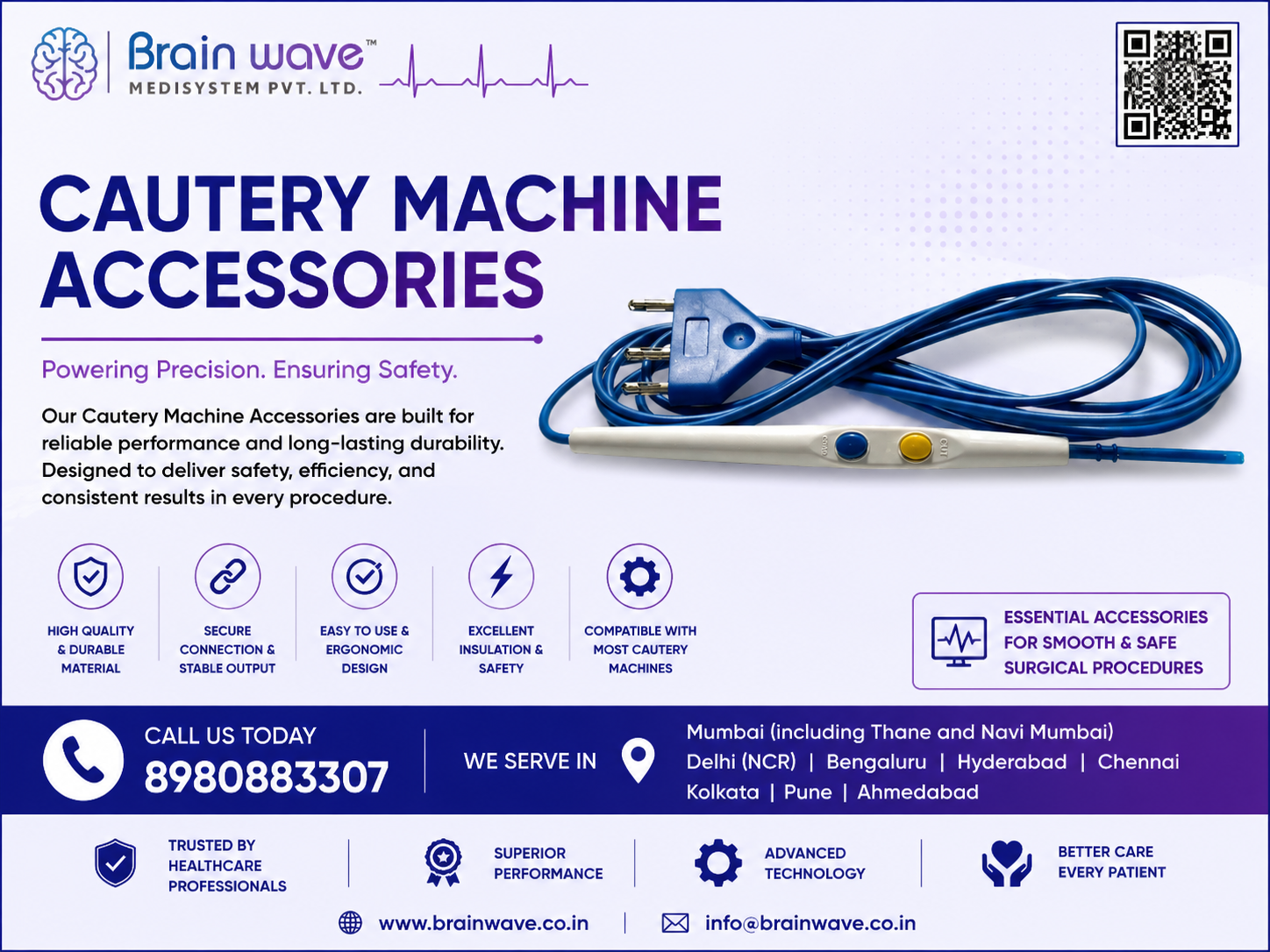
Cautery machine accessories are supporting medical components used with compatible electrosurgical equipment during surgical procedures. Depending on the type of cautery system and the procedure being performed, different accessories may be required. These can include bipolar forcep cables, electrosurgical cables, handpieces, electrodes, connecting cables and other compatible components.
The accessory is not simply an additional item attached to the equipment. It forms part of the overall electrosurgical setup and needs to provide an appropriate connection between the relevant equipment and surgical component. Therefore, selecting an accessory should involve checking the equipment model, connector configuration, intended application and manufacturer’s technical requirements.
Brain Wave Medisystem categorizes Cautery Machine Accessories separately within its Hospital Equipment Accessories section, demonstrating the importance of dedicated accessories in maintaining medical equipment and surgical workflows.
Why Quality Cautery Accessories Matter
In an operating environment, equipment reliability and proper accessory selection are important considerations. A suitable accessory should be designed for its intended application and should provide dependable connection and performance under the operating conditions specified by the manufacturer.
A poorly matched cable or accessory may create connection issues, affect equipment operation or cause unnecessary interruptions during a procedure. For this reason, hospitals and healthcare facilities should avoid choosing cautery accessories solely on the basis of appearance or price. Technical compatibility and appropriate specifications should always be considered.
Brain Wave’s existing cautery-related content highlights the importance of high conductivity, stable electrical output, durable insulation, compatibility, flexible handling and reusable construction for suitable bipolar forcep cables.
Bipolar Forcep Cables and Their Importance
One of the important accessories used with suitable electrosurgical systems is a bipolar forcep cable. This cable connects compatible bipolar forceps to the electrosurgical unit and helps establish the electrical pathway required by the system.
The cable must be compatible with both the forceps and the electrosurgical equipment. Connector type, cable construction, insulation, length and other technical specifications can vary between systems. Consequently, hospitals should verify the required specifications before purchasing a replacement cable.
Brain Wave’s existing article describes its bipolar forcep cable as an accessory intended to support consistent energy delivery in electrosurgery. It also highlights features such as high conductivity, durable insulation, compatibility with standard electrosurgical units and flexible handling.
Compatibility Should Always Be Verified
One of the most important factors when purchasing cautery machine accessories is compatibility. Electrosurgical equipment can use different connector configurations and accessory designs depending on the manufacturer, model and intended application.
A cable that looks similar to an existing accessory may not necessarily be the correct replacement. Before placing an order, healthcare procurement teams and biomedical engineers should confirm the equipment manufacturer, model number, connector type, accessory type, cable specifications and other requirements specified by the equipment manufacturer.
This approach is particularly important for hospitals operating multiple electrosurgical units because different systems may require different accessories. Selecting the correct component helps avoid unnecessary purchasing errors and supports appropriate equipment maintenance.
Durable Insulation for Surgical Environments
Electrical insulation is another important consideration for electrosurgical accessories. Cables used around surgical equipment should have insulation appropriate for their intended application and operating conditions. The insulation helps separate the conductive pathway from external surfaces and contributes to the safe construction of the accessory.
Brain Wave’s cautery accessory content specifically emphasizes high-grade, heat-resistant insulation as an important characteristic of its bipolar forcep cable offering.
Healthcare facilities should nevertheless follow the product manufacturer’s instructions regarding inspection, handling, cleaning, sterilization and replacement. Any cable showing visible damage, exposed conductors, deterioration or connector problems should be evaluated by appropriately qualified personnel.
Conductivity and Stable Electrical Connection
For compatible electrosurgical accessories, the quality of the electrical connection is an important technical consideration. A properly specified cable should establish the connection required by the electrosurgical system and the compatible surgical instrument.
Brain Wave’s existing cautery article highlights high conductivity and stable electrical output as characteristics of its bipolar forcep cable.
It is important, however, not to treat a cable specification in isolation. The performance of an electrosurgical system depends on the complete system, including the generator, cable, instrument, settings, patient-contact components and operating procedure. All components should therefore be used according to the relevant manufacturer’s instructions.
Ergonomic Design and Practical Handling
Surgical accessories may be handled repeatedly during procedures, making flexibility and ergonomic design useful considerations. A cable that can be appropriately positioned without unnecessary obstruction can contribute to an organized operating environment.
Brain Wave’s existing bipolar forcep cable content mentions flexible handling and ergonomic considerations as part of its accessory design.
However, accessory handling should always follow established operating-room procedures. Cables should be positioned appropriately and inspected before use to identify visible damage or abnormalities.
Reusable Accessories and Sterilization Considerations
Some surgical accessories are designed for repeated use and may require cleaning and sterilization between procedures. In such cases, healthcare facilities should follow the manufacturer’s approved sterilization method and instructions.
Brain Wave’s existing cautery article describes its bipolar forcep cable as reusable and capable of withstanding repeated sterilization cycles.
This does not mean that every cautery accessory can be sterilized in the same way. The correct sterilization method depends entirely on the specific product. Hospitals should therefore verify whether an accessory is reusable, disposable, autoclavable or subject to other cleaning requirements before processing it.
Inspecting Cautery Accessories Before Use
Routine inspection can help healthcare teams identify accessories that may require attention before they are used. Cables should be checked for visible cuts, cracks, exposed wires, damaged insulation, loose connectors, deformation or other signs of wear.
Connectors should also be inspected for damage and should fit the compatible equipment correctly. If an accessory does not connect properly or shows signs of deterioration, it should not simply be forced into place. The equipment and accessory should be assessed by appropriately trained technical personnel.
Preventive inspection is particularly useful in busy hospital environments where surgical accessories may be used frequently.
Importance of Proper Storage
Appropriate storage can help protect reusable medical accessories from unnecessary damage. Cables should generally be stored in a way that avoids excessive bending, crushing, pulling or sharp folds. Connectors should be protected from unnecessary impact, and accessories should be kept in accordance with the manufacturer’s storage requirements.
Hospitals can also benefit from maintaining organized accessory inventories. Clearly identifying accessories according to equipment model and application can make it easier for biomedical and operating-room teams to locate the appropriate component when required.
Cautery Accessories and Surgical Workflow
A surgical procedure involves coordination between medical professionals, instruments, equipment and supporting accessories. Even a small accessory can become important when it forms part of the connection between an electrosurgical generator and a surgical instrument.
Having appropriate replacement accessories available can help hospitals manage routine maintenance and reduce delays caused by damaged or unavailable components. For facilities with multiple operating rooms, maintaining an organized stock of compatible accessories can be particularly useful.
The goal is not simply to have a large inventory but to maintain the right accessories for the equipment actually being used.
Choosing Cautery Machine Accessories for Hospitals
When purchasing cautery machine accessories, healthcare institutions should consider several factors. The first is the exact equipment model and manufacturer. The second is the required accessory type and connector configuration. The third is whether the accessory is intended for reusable or single-use applications. Other considerations can include cable length, insulation, material, sterilization requirements, packaging, warranty and supplier support.
Procurement teams should also check whether the accessory is intended for the specific electrosurgical application. When technical specifications are unclear, it is better to obtain confirmation from the supplier or qualified biomedical personnel before ordering.
This can help reduce the possibility of purchasing incompatible accessories and supports better equipment-management practices.
Brain Wave Medisystem’s Medical Accessory Range
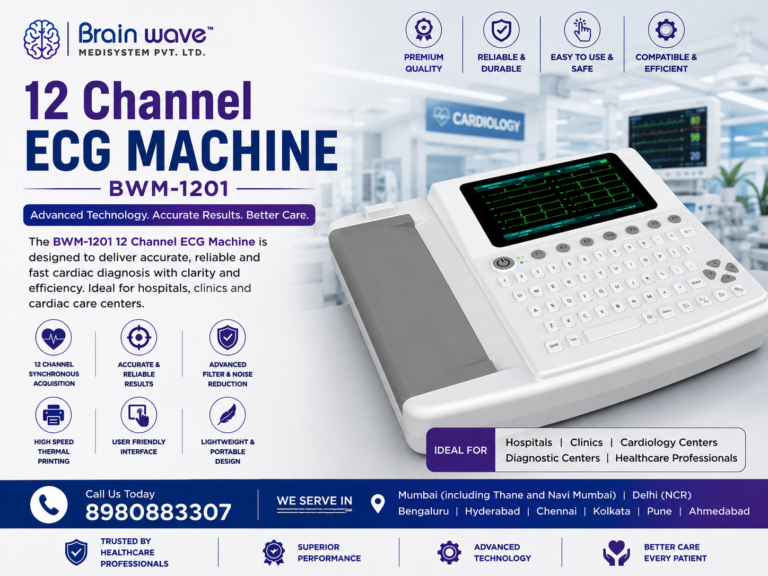
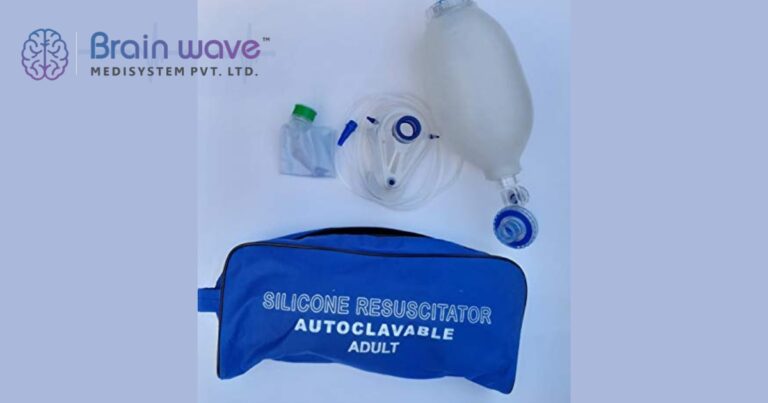
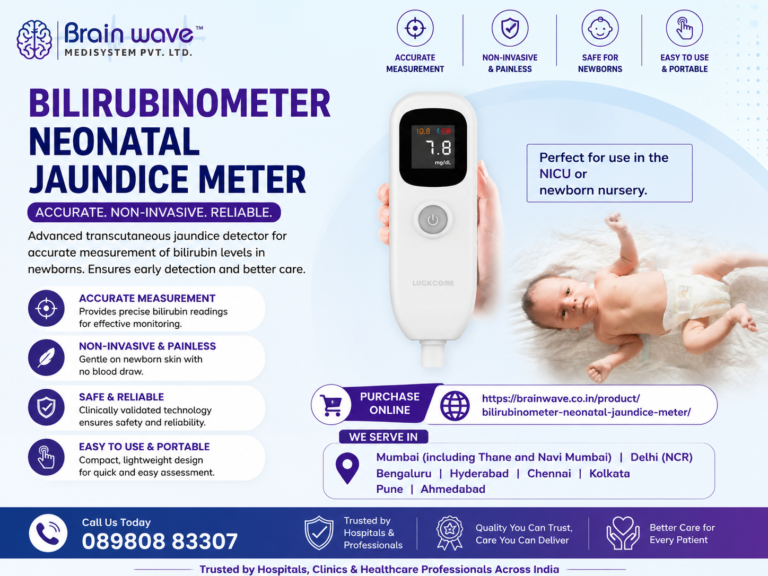
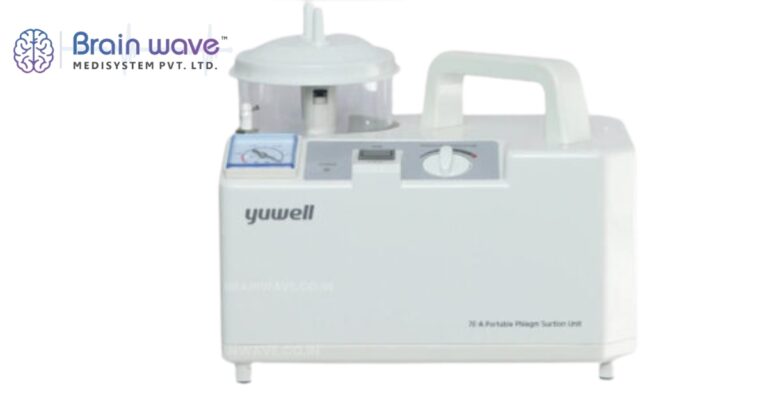
Brain Wave Medisystem Pvt. Ltd. offers hospital equipment and medical equipment accessories across several categories. Its Company Catalog lists Cautery Machine Accessories together with anaesthesia and ventilator circuits, ECG accessories, ECG cables, EKG cables, face masks, flow sensors, laryngoscopes, NIBP accessories, oxygen sensors, respiratory-care products and SpO2-related accessories.
The company’s About Us page states that its accessory portfolio includes products such as SPO2 probes, ECG cables, clamp electrodes, bulb electrodes, medical batteries, ventilator accessories and other hospital equipment accessories. It also highlights quality checks, durability, precision, compatibility and technical assistance.
The website further states that Brain Wave provides installation assistance, product demonstrations, staff training, servicing and maintenance support.
Nationwide Medical Equipment Support
Brain Wave’s website presents the company as a supplier of hospital equipment and medical equipment accessories for hospitals, dealers, distributors and healthcare institutions. Its website highlights nationwide reach and customer support, making accessibility an important part of its overall service offering.
For hospitals looking for replacement accessories, working with a supplier that can provide product information and technical guidance can be useful. This becomes particularly relevant when accessories have specific compatibility requirements.
Maintaining a Reliable Cautery Setup
A reliable cautery setup involves more than the electrosurgical generator itself. Compatible cables, forceps, electrodes and other supporting components need to be selected and maintained appropriately. Regular inspection, correct storage and following manufacturer instructions can help healthcare facilities maintain their equipment and accessories.
Biomedical engineering teams can also maintain records of accessory replacement and equipment servicing. This can help identify recurring issues and make future procurement more organized.
Where an accessory is damaged or reaches the end of its recommended service life, replacement should be carried out according to the relevant equipment and accessory manufacturer’s instructions.
Safety and Professional Use
Cautery and electrosurgical equipment should only be operated by trained healthcare professionals according to applicable clinical protocols and the manufacturer’s instructions. Accessories should not be modified or used outside their intended specifications.
Because electrosurgical equipment involves electrical energy and surgical applications, technical compatibility and proper handling are especially important. If there is uncertainty regarding an accessory, connector, sterilization process or equipment setting, the appropriate qualified technical or clinical professional should be consulted.
This article is intended to provide general information about cautery machine accessories and should not replace the manufacturer’s instructions, hospital protocols or professional clinical guidance.
Conclusion
Cautery machine accessories are an important part of an effective electrosurgical setup. Components such as bipolar forcep cables and other compatible accessories help establish the connections required between electrosurgical equipment and surgical instruments. Their construction, insulation, conductivity, compatibility and durability should therefore be carefully considered before purchase.
For hospitals and healthcare facilities, the most important step is to identify the exact equipment and verify the required accessory specifications. Choosing an accessory simply because it looks similar to an existing component can result in compatibility problems. Instead, procurement teams should verify the equipment model, connector configuration, accessory type, intended use, cleaning or sterilization requirements and manufacturer’s recommendations.
Brain Wave Medisystem includes Cautery Machine Accessories within its Hospital Equipment Accessories portfolio and provides a wider selection of medical accessories for healthcare institutions. Its website emphasizes quality, compatibility, technical assistance and after-sales support, making these factors useful considerations when sourcing accessories for hospital equipment.
For surgical facilities, maintaining the right compatible accessories alongside electrosurgical equipment can support a more organized, dependable and efficient equipment-management workflow