
Introduction to the Besdata Video Laryngoscope
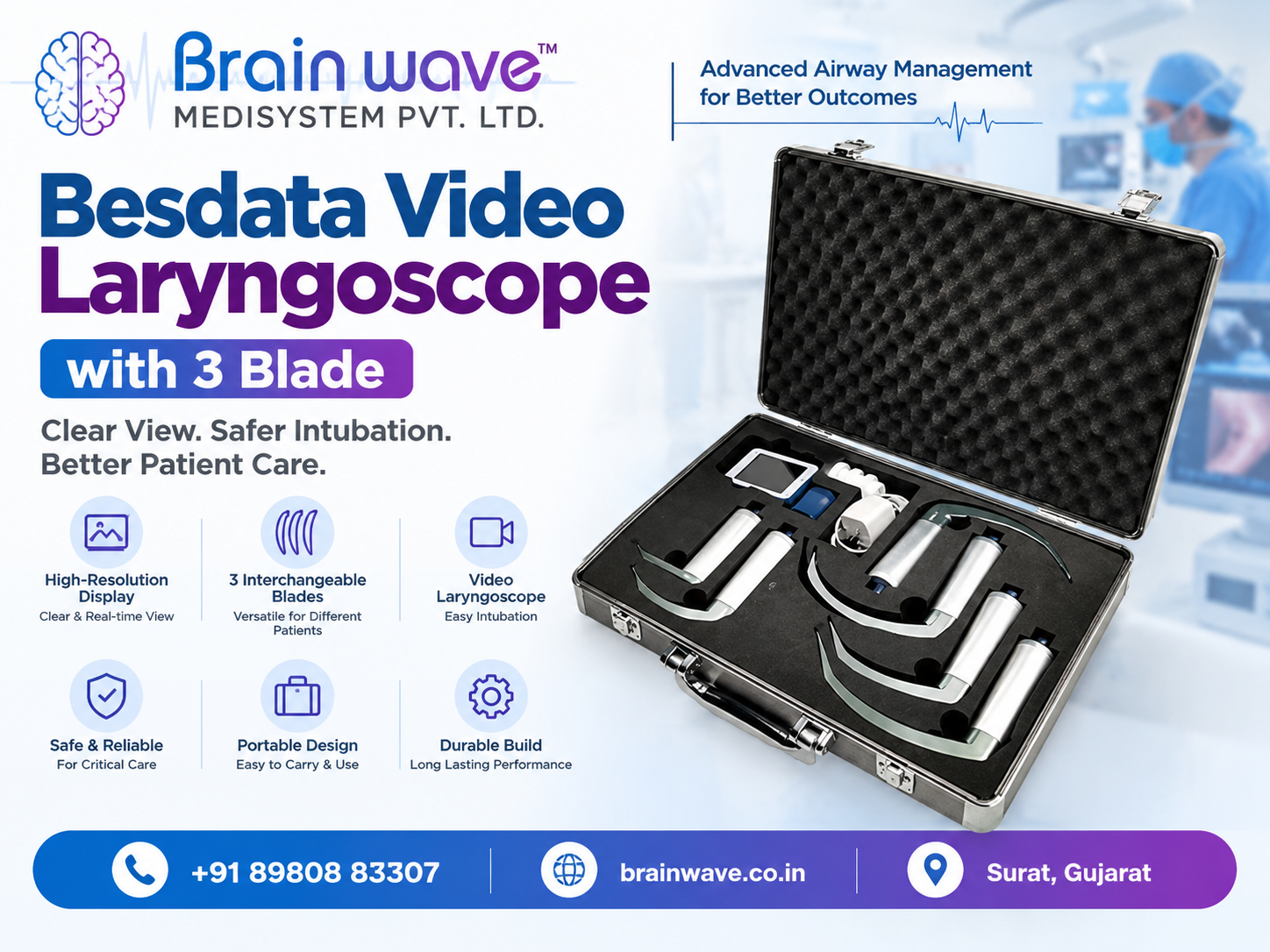
The Besdata Video Laryngoscope with 3 Blade is a medical equipment option for healthcare facilities exploring video-assisted airway visualization technology. Video laryngoscopes are designed to help trained healthcare professionals view airway structures during intubation procedures. By incorporating a camera and display system, these devices provide an alternative to conventional direct laryngoscopy in appropriate clinical situations.
For hospitals, multispecialty clinics, emergency departments, and other healthcare facilities, selecting suitable airway management equipment is an important part of medical equipment planning. Factors such as device compatibility, blade selection, image visibility, handling, cleaning requirements, and manufacturer documentation should be considered before purchasing.
Brainwave Medisystem Pvt. Ltd. supplies medical equipment and supports healthcare organisations looking for suitable equipment solutions. Hospitals and healthcare providers across Mumbai, Thane, Navi Mumbai, Delhi NCR, Bengaluru, Hyderabad, Chennai, Kolkata, Pune, and Ahmedabad can contact Brainwave Medisystem Pvt. Ltd. to enquire about product availability, specifications, and procurement requirements.
What Is a Video Laryngoscope?
A video laryngoscope is a medical device that uses a camera and display to provide a view of airway structures during laryngoscopy. Depending on the device design, the camera may be integrated into the blade or positioned near its tip. The resulting image is displayed on a compatible screen, allowing the trained operator to observe the airway during the procedure.
Video-assisted airway visualization has become an important consideration in modern clinical environments. Healthcare professionals may evaluate these devices when developing airway management protocols, purchasing new medical equipment, or reviewing existing clinical equipment.
Unlike conventional laryngoscopes, which rely on the operator’s direct line of sight, video laryngoscopes provide an electronic image of the relevant anatomy. The suitability of a particular device depends on its design, clinical application, operator training, and the requirements of the healthcare facility.
The Besdata Video Laryngoscope with 3 Blade is a product worth evaluating when comparing video-assisted airway management equipment. Buyers should confirm the exact model, included components, blade types, and manufacturer specifications before making a purchase decision.
Understanding the Three-Blade Configuration
Blade selection is an important consideration when evaluating a video laryngoscope. Different blade designs can support different airway visualization approaches, depending on the device’s intended use and the patient’s anatomy.
A three-blade configuration indicates that the product offering is associated with three blades. However, the precise blade shapes, sizes, compatibility, and intended applications should be confirmed from the manufacturer’s documentation or the supplier’s product information.
Healthcare procurement teams should verify the following details before ordering:
- The number of blades included in the package.
- The available blade sizes and designs.
- Compatibility between the blades and the video laryngoscope handle or display unit.
- Whether the blades are reusable or intended for single use.
- The manufacturer’s instructions for cleaning, disinfection, or sterilization, as applicable.
- Availability of replacement blades and compatible accessories.
- The manufacturer’s recommended clinical applications and user requirements.
These checks help hospitals make informed purchasing decisions and avoid ordering equipment that does not meet their operational requirements.
Importance of Video-Assisted Airway Visualization
Airway management is a critical clinical responsibility in settings such as operating theatres, emergency departments, intensive care units, and other areas where airway procedures may be required.
Video laryngoscopes provide a displayed view of airway structures and may be considered as part of an institution’s airway management equipment strategy. Their use depends on clinical judgement, appropriate training, patient-specific factors, and established medical protocols.
Healthcare organisations evaluating the Besdata Video Laryngoscope should consider how the device fits into their existing equipment inventory and clinical workflows.
A purchasing assessment may include reviewing the device’s image display, handling characteristics, blade options, battery or power requirements, cleaning instructions, and compatibility with other equipment.
Hospitals should also assess whether their clinical teams have the necessary training and whether the proposed device aligns with the institution’s approved airway management procedures.
It is important to understand that a video laryngoscope does not guarantee successful intubation or eliminate clinical risks. Its suitability and performance depend on multiple factors, including device design, the patient’s condition, operator experience, and the circumstances of the procedure.
Potential Clinical Settings for Evaluation
The appropriate use of a video laryngoscope depends on its approved indications and the manufacturer’s instructions. Healthcare facilities may evaluate video-assisted airway equipment for relevant clinical environments.
1. Hospital Operating Theatres
Operating theatres require appropriate airway management equipment selected according to surgical requirements, anaesthesia protocols, and institutional policies.
When evaluating the Besdata Video Laryngoscope with 3 Blade, hospital procurement teams can review the device’s compatibility, available blade options, cleaning requirements, and suitability for their intended clinical applications.
The final selection should be made in consultation with the relevant clinical and biomedical engineering teams.
2. Intensive Care Units
Intensive care units manage patients with complex medical needs and require equipment appropriate to their clinical environment.
Video laryngoscopes may be considered as part of an ICU’s airway management equipment inventory when supported by institutional protocols and the device’s intended use.
Facilities should review equipment availability, maintenance arrangements, staff training, and manufacturer recommendations before introducing a new device.
3. Emergency Departments
Emergency departments need access to appropriately selected medical equipment for urgent clinical situations.
Healthcare administrators assessing video laryngoscopes should consider device readiness, accessibility, cleaning procedures, replacement accessories, and staff familiarity.
The suitability of the Besdata Video Laryngoscope should be assessed against the hospital’s emergency care requirements rather than assumed from the product name alone.
4. Medical Training Facilities
Medical colleges and clinical training centres may evaluate video-assisted airway equipment for education and supervised skills development where appropriate.
Before selecting a device for training, institutions should confirm its intended use, available accessories, display functionality, and compatibility with their teaching requirements.
Training must be conducted by qualified personnel in accordance with applicable clinical guidance and manufacturer instructions.
Features to Check Before Purchasing
When comparing the Besdata Video Laryngoscope with 3 Blade against other airway visualization devices, buyers should review the manufacturer’s published specifications.
The following areas can help structure the evaluation process.
Display and Image Quality
The display is an important part of a video laryngoscope system. Buyers should check the screen specifications, image clarity, viewing angle, and other documented display characteristics.
Specific resolution, screen size, camera performance, and imaging features should not be assumed without confirmation from the manufacturer.
Blade Compatibility
Blade compatibility should be verified before purchasing the device. Confirm which blades are supplied, whether additional sizes are available, and whether replacement blades can be obtained for the exact model.
Healthcare facilities should also establish whether the blade configuration meets their intended clinical requirements.
Power and Battery Requirements
Depending on the design, video laryngoscopes may use rechargeable batteries, replaceable batteries, or another power arrangement.
Buyers should verify the device’s power specifications, charging method, operating requirements, and any manufacturer-provided battery information.
Cleaning and Infection Prevention
Medical equipment must be managed according to the manufacturer’s instructions and the healthcare facility’s infection prevention policies.
Before purchasing, confirm which components can be cleaned, disinfected, or sterilized, the approved procedures for each component, and any restrictions on reprocessing.
Do not assume that a blade or other component is reusable or autoclavable unless the manufacturer explicitly confirms it.
Maintenance and Technical Support
Equipment reliability is an important consideration for healthcare procurement teams. Buyers should ask about warranty terms, recommended maintenance, spare parts, and available technical support.
The supplier should also clarify which services are available for the specific product and whether any support depends on the manufacturer or an authorised service provider.
How to Choose the Right Video Laryngoscope
Selecting medical equipment involves more than comparing product names or prices. Healthcare facilities should assess clinical needs, technical requirements, operational considerations, and the total cost of ownership.
Start by identifying the intended application and consulting the clinicians who will use the equipment. Their input can help establish the required blade configuration, display characteristics, handling preferences, and compatibility requirements.
Next, review the manufacturer’s documentation. Confirm the model number, included components, technical specifications, applicable certifications, intended use, and warranty conditions.
Procurement teams should also compare the availability of replacement accessories, servicing arrangements, delivery timelines, and supplier support.
For facilities considering the Besdata Video Laryngoscope with 3 Blade, requesting a detailed product specification sheet can help ensure that the equipment matches the institution’s requirements.
Clinical staff should receive appropriate training before using any video laryngoscope. Device selection and clinical use should follow the manufacturer’s instructions and the healthcare facility’s approved protocols.
Why Medical Equipment Buyers Can Contact Brainwave Medisystem Pvt. Ltd.
Brainwave Medisystem Pvt. Ltd. serves healthcare equipment buyers seeking information about medical devices and procurement options in India.
Hospitals, clinics, diagnostic centres, and healthcare organisations often need assistance identifying suitable equipment, checking product specifications, and understanding purchasing requirements.
Brainwave Medisystem Pvt. Ltd. offers medical equipment-related sales and product enquiry support. Buyers can contact the company to ask about product availability, technical documentation, pricing enquiries, and the purchasing process for relevant medical equipment.
For customers searching for medical equipment suppliers in Mumbai, Brainwave Medisystem Pvt. Ltd. provides a point of contact for enquiries originating in Mumbai and other listed Indian markets.
When enquiring about the Besdata Video Laryngoscope, buyers should provide the exact product name and any available model reference. This helps the supplier verify the product details and clarify the current availability of the requested configuration.
Customers should confirm whether the three-blade package, replacement components, warranty, and any requested technical services are available for the particular model before placing an order.
Medical Equipment Procurement in Mumbai and Across India
Medical equipment procurement requires coordination between clinical teams, hospital administrators, biomedical engineers, and purchasing departments.
For organisations seeking medical equipment suppliers in Mumbai, choosing a supplier that can clarify product details and procurement requirements can make the purchasing process more organised.
Brainwave Medisystem Pvt. Ltd. supports product enquiries from healthcare organisations in Mumbai, Thane, Navi Mumbai, Delhi NCR, Bengaluru, Hyderabad, Chennai, Kolkata, Pune, and Ahmedabad.
Healthcare buyers can discuss their requirements, request available product information, and verify the commercial details relevant to their order.
When evaluating a video laryngoscope, procurement teams should consider the equipment’s intended use, included accessories, manufacturer documentation, delivery arrangements, warranty terms, and ongoing maintenance requirements.
These checks support informed procurement and help healthcare organisations select equipment that aligns with their clinical and operational needs.
Frequently Asked Questions
What is the Besdata Video Laryngoscope with 3 Blade?
The Besdata Video Laryngoscope with 3 Blade is a medical equipment product associated with video-assisted airway visualization. Buyers should verify the exact model, included blades, and intended use through the manufacturer’s documentation.
What are the benefits of a video laryngoscope?
Video laryngoscopes provide an electronic view of airway structures during laryngoscopy. Depending on the clinical situation and device design, this view may support airway assessment and procedural guidance by trained healthcare professionals. Outcomes are not guaranteed, and appropriate training remains essential.
Are three blades included with the product?
The product name indicates a three-blade configuration, but the precise package contents should be confirmed with the supplier before ordering. Buyers should check the blade sizes, designs, compatibility, and availability of replacement components.
Where can I enquire about this product in India?
You can contact Brainwave Medisystem Pvt. Ltd. to enquire about the Besdata Video Laryngoscope with 3 Blade, product availability, specifications, and purchasing requirements.
What should hospitals check before buying a video laryngoscope?
Hospitals should verify the technical specifications, blade compatibility, power requirements, cleaning instructions, intended use, manufacturer documentation, warranty, and availability of replacement accessories. Clinical suitability should be assessed by qualified healthcare professionals.
Conclusion
The Besdata Video Laryngoscope with 3 Blade is a product for healthcare organisations evaluating video-assisted airway visualization equipment. Before purchasing, hospitals and clinics should confirm the model’s specifications, blade configuration, compatibility, cleaning requirements, and intended clinical applications.
Brainwave Medisystem Pvt. Ltd. supports medical equipment enquiries for healthcare buyers in Mumbai and other Indian markets. Contact the company to discuss product availability, request relevant product documentation, and clarify purchasing requirements.
Making an informed equipment decision involves reviewing manufacturer information, consulting clinical users, and considering the institution’s operational needs. These steps help healthcare organisations evaluate whether a video laryngoscope is appropriate for their intended application.
Contact Brainwave Medisystem Pvt. Ltd.
Company: Brainwave Medisystem Pvt. Ltd.
Phone: 089808 83307
Website: https://brainwave.co.in/
Service Locations: Mumbai, Thane, Navi Mumbai, Delhi NCR, Bengaluru, Hyderabad, Chennai, Kolkata, Pune, and Ahmedabad.
Contact Brainwave Medisystem Pvt. Ltd. for enquiries about the Besdata Video Laryngoscope with 3 Blade and other medical equipment solutions. Confirm current product availability, specifications, and applicable terms directly with the company.