
Introduction
Electrocardiography (ECG) is an important diagnostic procedure used to record the electrical activity of the heart. It helps healthcare professionals assess heart rhythm, identify irregularities and support the evaluation of various cardiac conditions. ECG examinations are commonly performed in hospitals, clinics, cardiac departments, diagnostic centres and emergency care facilities.
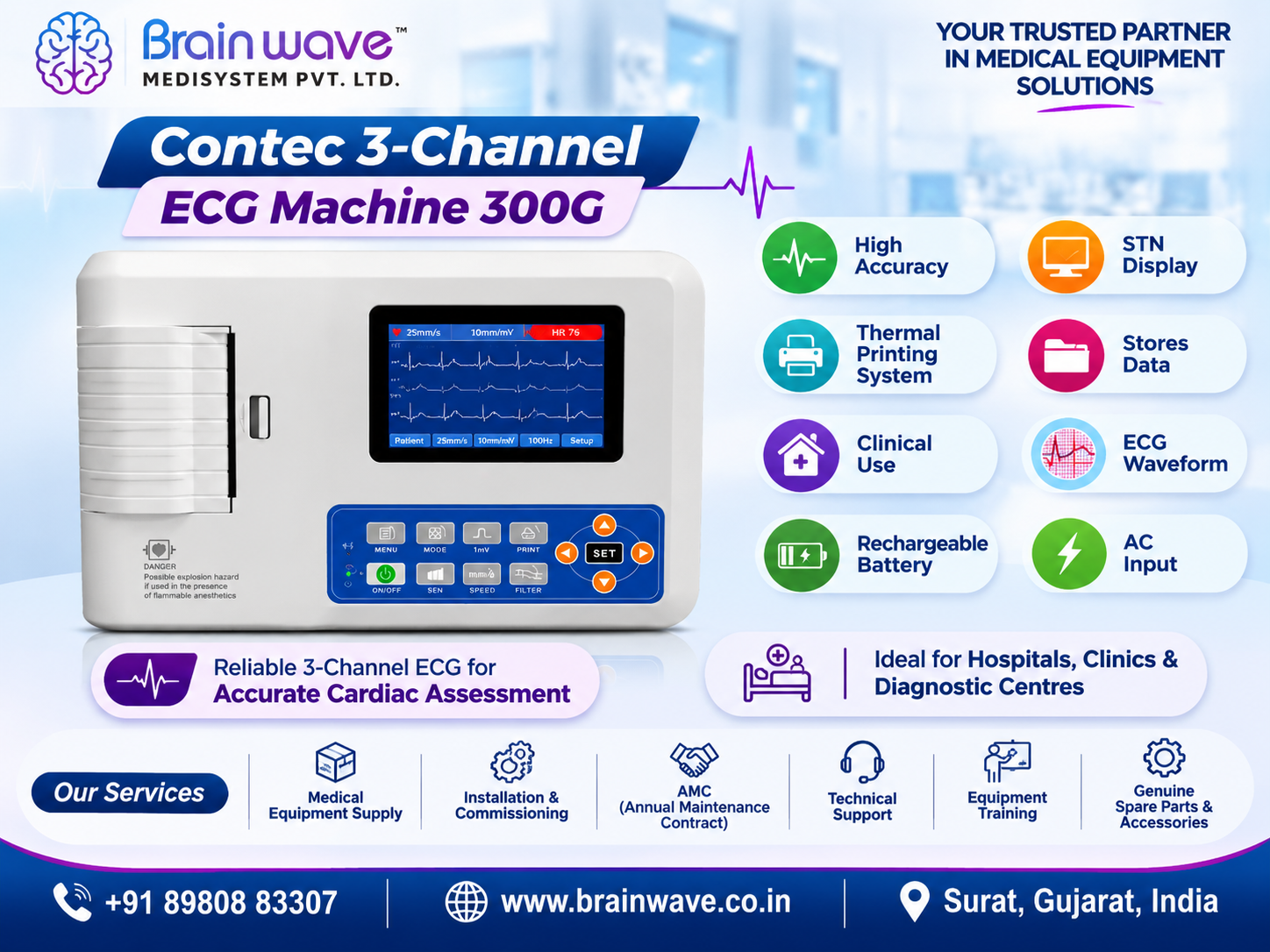
The Contec 3-Channel ECG Machine 300G is a medical diagnostic device designed for recording electrocardiogram signals. It is intended for healthcare environments where ECG examinations form part of routine patient assessment and cardiac evaluation.
A dependable ECG recording system can support clinical workflows by helping medical professionals obtain and review cardiac electrical activity. Selecting suitable ECG equipment is therefore an important consideration for healthcare facilities planning to establish or upgrade their diagnostic capabilities.
Brainwave Medisystem Pvt. Ltd., based in Surat, Gujarat, India, supplies medical equipment and supports healthcare facilities with equipment-related services. Hospitals, clinics and diagnostic centres looking for the Contec 3-Channel ECG Machine 300G can contact Brainwave Medisystem for product information and assistance.
What Is a 3-Channel ECG Machine?
An electrocardiograph, commonly known as an ECG or EKG machine, records the electrical signals generated by the heart. These signals are captured through electrodes placed at specific positions on the patient’s body.
The ECG machine processes the signals and produces a graphical representation of the heart’s electrical activity. Healthcare professionals examine the recorded waveform to assess different aspects of cardiac function.
A 3-channel ECG machine is a type of electrocardiograph designed to record and present ECG information using a three-channel recording format. The number of channels describes the recording and presentation format; it should not be confused with the total number of ECG leads supported by a particular model.
The Contec 300G belongs to this category of ECG equipment. It can be considered by healthcare facilities that require an ECG recording system for routine diagnostic workflows. Buyers should confirm the exact supported leads, recording modes, display features, paper specifications and connectivity options from the current product documentation before purchasing.
Introduction to the Contec 3-Channel ECG Machine 300G
The Contec 3-Channel ECG Machine 300G is an electrocardiography device intended for recording cardiac electrical activity. ECG machines are commonly used in clinical settings to assist medical professionals during patient examinations and cardiac assessments.
For hospitals and diagnostic centres, an ECG machine is an important part of routine diagnostic infrastructure. It may be used during general health assessments, cardiac consultations, pre-operative evaluations and other examinations where an ECG recording is clinically required.
The Contec 300G is relevant to healthcare facilities that are evaluating a three-channel ECG machine for their diagnostic requirements. Before finalising an order, the facility should review the product’s official specifications, compatible accessories, consumables and operating requirements.
Product information:
- Product: Contec 3-Channel ECG Machine 300G
- Category: ECG Machine / Electrocardiograph
- Manufacturer/Brand: Contec
- Application: ECG recording and cardiac assessment support
- Supplier: Brainwave Medisystem Pvt. Ltd.
- Location: Surat, Gujarat, India
For the latest product details, visit the product page:
https://brainwave.co.in/product/contec-3-channel-ecg-machine-300g/
How Does an ECG Machine Work?
The heart produces electrical impulses that coordinate the contraction and relaxation of its chambers. These impulses can be detected using electrodes placed on the patient’s skin.
An ECG examination generally follows a series of steps:
1. Patient Preparation
The patient is positioned comfortably, usually lying on an examination bed. The healthcare professional explains the procedure and prepares the areas where the electrodes will be placed.
2. Electrode Placement
ECG electrodes are attached to specific positions on the patient’s body according to the required ECG configuration. Correct placement is important because electrode positioning can influence the quality and interpretation of the recorded signal.
3. Signal Acquisition
The electrodes detect electrical activity generated by the heart. The ECG machine receives these signals through the patient cable and processes them for recording.
4. ECG Waveform Recording
The machine produces an ECG tracing that represents the heart’s electrical activity. Depending on the model and selected configuration, the recording may be presented through its available display or recording system.
5. Clinical Review
A qualified healthcare professional reviews the ECG tracing in combination with the patient’s symptoms, medical history and other clinical findings. The ECG recording supports clinical assessment but should not be interpreted in isolation.
Why Is ECG Equipment Important in Healthcare Facilities?
ECG examinations are used in many areas of healthcare. Having suitable ECG equipment available can help facilities conduct cardiac assessments as part of their regular clinical services.
Routine Cardiac Assessment
ECG recording is frequently included in patient evaluations when a doctor needs information about heart rhythm and electrical activity. It may be recommended during routine consultations or when a patient reports symptoms that require cardiac assessment.
Hospital Diagnostic Departments
Hospitals need diagnostic equipment to support different departments and clinical services. An ECG machine can form part of the equipment available in general medicine, cardiology and other relevant departments.
Emergency Care
In emergency settings, ECG examinations may be requested when patients present with symptoms that require urgent cardiac evaluation. Availability of suitable ECG equipment can support the clinical team’s assessment process.
Pre-Operative Evaluation
ECG testing may be included in pre-operative assessment when clinically indicated. The results can contribute to the broader evaluation conducted by the treating medical team.
Diagnostic Centres
Diagnostic centres may offer ECG examinations as part of their services. Selecting an appropriate ECG system involves considering expected patient volume, workflow, available space, consumable requirements and technical support.
Key Considerations When Buying a 3-Channel ECG Machine
Choosing an ECG machine requires more than comparing product names or prices. Healthcare facilities should evaluate the equipment according to their clinical requirements and operating environment.
1. ECG Recording Requirements
Understand the type of ECG examinations your facility performs. Confirm the supported lead configuration, recording format and operating modes from the manufacturer’s documentation.
2. Display and User Interface
The display and controls should be suitable for the staff who will operate the equipment. Check the screen details, menu structure and available controls during product evaluation.
3. Printing and Recording Requirements
Review the machine’s recording and printing capabilities. Confirm the supported paper type, paper dimensions, printing format and availability of compatible consumables.
4. ECG Cables and Electrodes
Patient cables, lead wires, electrodes and connectors are essential parts of the ECG setup. Confirm which accessories are included with the machine and which items need to be purchased separately.
5. Data Storage and Connectivity
If your facility needs to save, transfer or manage ECG records digitally, check the exact storage and connectivity options supported by the selected model. Do not assume that every ECG machine includes the same data-management features.
6. Ease of Operation
The equipment should fit into the facility’s existing workflow. Consider staff training requirements, daily operating procedures and the time needed to prepare the machine for examinations.
7. Service and Technical Support
After-sales support is an important purchasing consideration. Ask about installation requirements, technical assistance, warranty coverage, maintenance arrangements and spare-part availability.
8. Total Cost of Ownership
Compare the overall cost of operating the machine, not just its purchase price. Consumables, accessories, maintenance and service requirements can influence the long-term cost of ownership.
Applications of the Contec 3-Channel ECG Machine 300G
The Contec 3-Channel ECG Machine 300G can be considered by healthcare facilities that require ECG recording equipment for their diagnostic workflows.
Potential healthcare settings include:
Hospitals
Hospitals use ECG equipment in departments where cardiac electrical activity needs to be recorded as part of patient assessment. The equipment selection should match the hospital’s patient volume and clinical workflow.
Cardiology Clinics
Cardiology clinics conduct cardiac consultations and diagnostic evaluations. An ECG machine can support examinations when an ECG recording is required by the treating clinician.
General Physician Clinics
General medical practices may use ECG equipment as part of their diagnostic services, depending on the needs of their patients and the services offered by the clinic.
Diagnostic Centres
Diagnostic centres that provide ECG testing need equipment that matches their daily examination volume, recording requirements and reporting workflow.
Nursing Homes
Nursing homes and smaller healthcare facilities may consider ECG equipment as part of their diagnostic infrastructure. The selected model should be appropriate for the facility’s clinical needs and available technical support.
Understanding ECG Accessories and Consumables
An ECG machine operates as part of a complete setup. Accessories and consumables play an important role in obtaining recordings and maintaining the equipment’s usability.
Common ECG-related items include:
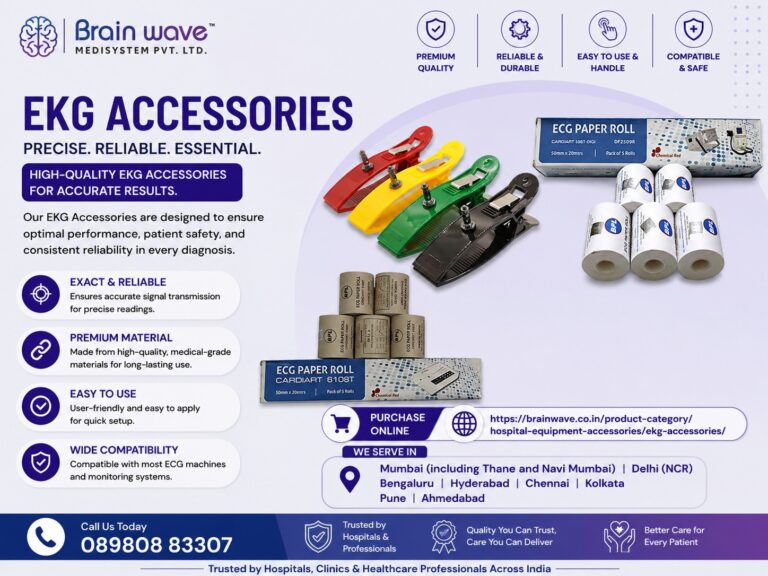
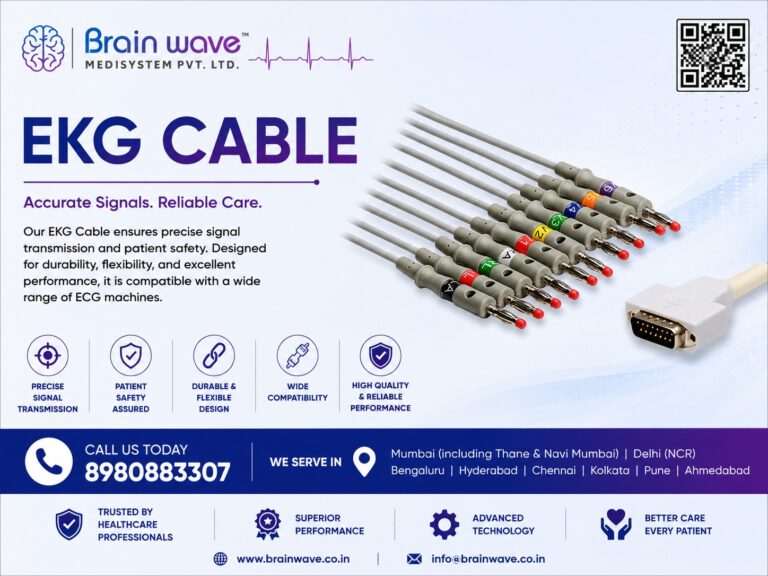
- Patient ECG cable: Connects the patient electrodes to the ECG machine.
- Lead wires: Carry electrical signals from the electrodes to the recording system.
- ECG electrodes: Provide contact between the patient’s skin and the ECG monitoring system.
- ECG recording paper: Used by compatible machines to produce printed ECG recordings.
- Power accessories: Support the machine’s power requirements according to the manufacturer’s specifications.
- Compatible connectors and accessories: Help maintain the intended connection between the machine and its approved components.
Before ordering accessories, healthcare facilities should verify the exact model compatibility. ECG cables and connectors are not universally interchangeable. A cable designed for one manufacturer or model may not work correctly with another.
Brainwave Medisystem Pvt. Ltd. also deals in medical equipment accessories and related supplies. Facilities can enquire about compatible ECG cables, recording paper and other requirements while discussing their equipment purchase.
Importance of Proper ECG Electrode Placement
Electrode placement is an important part of ECG recording. Incorrect positioning can affect the recorded waveform and may lead to misleading results.
Healthcare professionals should follow the electrode-placement instructions applicable to the examination and equipment configuration.
Some important practices include:
- Prepare the skin according to the facility’s clinical protocol.
- Use compatible electrodes and accessories.
- Follow the recommended electrode positions.
- Check that cables are connected correctly.
- Reduce unnecessary patient movement during recording.
- Review the tracing for technical issues before completing the examination.
- Follow the manufacturer’s instructions for operating the ECG machine.
Only trained healthcare professionals should conduct ECG examinations and interpret their clinical significance.
Maintenance and Care of ECG Equipment
Regular equipment care helps healthcare facilities maintain their diagnostic systems and reduce avoidable operating interruptions.
Keep the Equipment Clean
Clean the machine and its reusable accessories according to the manufacturer’s instructions and the hospital’s infection-control procedures. Do not use cleaning agents that may damage the equipment.
Inspect Cables and Connectors
Check patient cables, lead wires and connectors for visible wear, damage or loose connections. Damaged accessories should be handled according to the manufacturer’s recommendations.
Use Compatible Consumables
Use the recording paper, electrodes and other consumables recommended for the particular model. Incorrect consumables may affect operation or recording quality.
Follow Operating Instructions
Staff should follow the manufacturer’s instructions for starting, operating, cleaning and storing the equipment.
Arrange Periodic Technical Checks
Healthcare facilities should follow the recommended maintenance schedule and arrange technical inspection when required. Any unusual behaviour or suspected malfunction should be referred to qualified technical personnel.
Maintain Service Records
Keeping a record of maintenance, repairs and accessory replacements can help the facility plan equipment servicing and maintain its internal documentation.
Why Choose Brainwave Medisystem Pvt. Ltd.?
Selecting medical equipment is an important decision for hospitals, clinics and diagnostic centres. Along with the product itself, buyers should consider the supplier’s ability to support equipment procurement and related requirements.
Brainwave Medisystem Pvt. Ltd., located in Surat, Gujarat, India, provides medical equipment solutions for healthcare facilities.
The company supports customers with services and product-related assistance, including:
- Medical equipment supply
- Installation and commissioning support
- Annual Maintenance Contract (AMC) support
- Technical assistance
- Equipment operation training
- Genuine spare parts and accessories
- Medical equipment-related guidance
Whether a healthcare facility is setting up a new diagnostic department or upgrading existing equipment, Brainwave Medisystem can assist with product enquiries and equipment requirements.
To enquire about the Contec 3-Channel ECG Machine 300G, contact the Brainwave Medisystem team.
Questions to Ask Before Purchasing the Contec 300G
Before placing an order, buyers can use the following checklist to clarify the product requirements:
- What ECG lead configurations are supported?
- What recording and printing formats are available?
- Which accessories are included in the standard package?
- What type and size of ECG paper does the machine require?
- Are compatible patient cables and electrodes available?
- What data storage or connectivity features are supported?
- What are the installation and operating requirements?
- What warranty and service arrangements are available?
- Are replacement accessories and spare parts available?
- Is staff training or technical assistance available?
Confirming these points before purchase helps healthcare facilities select equipment that fits their workflow and avoids confusion about included accessories or optional features.
Frequently Asked Questions (FAQs)
1. What is the Contec 3-Channel ECG Machine 300G?
The Contec 3-Channel ECG Machine 300G is an electrocardiograph designed to record the electrical activity of the heart. It is intended for use in healthcare environments where ECG examinations are performed.
2. What does a 3-channel ECG machine mean?
A 3-channel ECG machine refers to the ECG recording and presentation format. The number of channels should not be confused with the total number of leads supported by the machine.
3. Where can an ECG machine be used?
ECG machines are commonly used in hospitals, cardiology clinics, general physician clinics, diagnostic centres and other healthcare facilities that conduct ECG examinations.
4. Who should operate an ECG machine?
ECG equipment should be operated by appropriately trained healthcare staff who understand patient preparation, electrode placement and the manufacturer’s operating instructions.
5. Does the Contec 300G include ECG cables and electrodes?
The exact accessories included may depend on the current product package. Buyers should confirm the supplied accessories with Brainwave Medisystem before placing an order.
6. Which ECG paper is compatible with the Contec 300G?
The compatible paper specification should be confirmed from the manufacturer’s documentation or product supplier. Always verify the paper type and dimensions before purchasing consumables.
7. Is technical support important when buying an ECG machine?
Yes. Technical assistance can help healthcare facilities address operating questions, maintenance requirements and equipment-related issues. Buyers should confirm the available support arrangements before purchasing.
8. Where can I enquire about the Contec 3-Channel ECG Machine 300G?
You can contact Brainwave Medisystem Pvt. Ltd. in Surat, Gujarat, India, for product enquiries and medical equipment assistance.
Conclusion
The Contec 3-Channel ECG Machine 300G is an ECG recording solution that healthcare facilities can consider when evaluating equipment for routine cardiac assessment and diagnostic workflows. Before purchasing, hospitals and clinics should review the official product specifications, supported recording configurations, accessories, consumables and service requirements.
Choosing the right ECG equipment also involves considering supplier support, maintenance arrangements and the availability of compatible accessories.
Brainwave Medisystem Pvt. Ltd., Surat, Gujarat, provides medical equipment supply and related support services for healthcare facilities. Contact the team to enquire about the Contec 3-Channel ECG Machine 300G and discuss your ECG equipment requirements.
Contact Brainwave Medisystem Pvt. Ltd.
Company: Brainwave Medisystem Pvt. Ltd.
Location: Surat, Gujarat, India
Phone: +91 89808 83307
Website: https://brainwave.co.in/