
Medical Oxygen Sensor for Accurate and Reliable Monitoring
Accurate monitoring is an essential part of modern healthcare, particularly in critical-care, respiratory-care, and anesthesia environments where medical equipment needs to provide dependable information for clinical decision-making. A medical oxygen sensor is an important component used within compatible medical devices to measure oxygen concentration and support the monitoring functions of the equipment. Although small in size, an oxygen sensor can play an important role in the overall performance of compatible respiratory and anesthesia systems. Selecting a suitable sensor therefore requires attention to compatibility, specifications, quality, reliability, installation requirements, and expected operating conditions. Brain Wave Medisystem Pvt. Ltd. includes Oxygen Sensor among its Hospital Equipment Accessories and provides various oxygen-cell solutions for compatible medical equipment.
What Is a Medical Oxygen Sensor?
A medical oxygen sensor, sometimes referred to as an O2 sensor or oxygen cell, is a component designed to detect and measure oxygen concentration within compatible medical equipment. Depending on the equipment design and sensor technology, the sensor works as part of the monitoring system rather than functioning as an independent oxygen-delivery device. Its measurements can be used by compatible equipment to help display or monitor oxygen concentration during operation.
This distinction is important because an oxygen sensor should not be confused with an oxygen concentrator, oxygen cylinder, or other oxygen-delivery equipment. An oxygen sensor is a monitoring component that works within compatible medical systems. Brain Wave’s product catalogue specifically places Oxygen Sensor under Hospital Equipment Accessories, alongside items such as flow sensors, ECG cables, NIBP accessories, respiratory-care products, and other medical accessories.
Why Oxygen Measurement Matters in Medical Equipment
Oxygen concentration is an important parameter in several healthcare applications. Medical equipment used for anesthesia, respiratory support, and critical-care monitoring may rely on oxygen sensing components to provide information about the oxygen concentration within the system. Reliable measurement can help compatible equipment maintain appropriate monitoring functionality and alert healthcare professionals when readings require attention.
The oxygen sensor itself is only one component of a larger medical system. Its performance depends on the equipment it is installed in, correct installation, compatibility, calibration or verification requirements, environmental conditions, and the manufacturer’s specified operating procedures. For this reason, healthcare facilities should always select and install oxygen sensors according to the equipment manufacturer’s requirements.
Accuracy and Consistent Performance
One of the primary considerations when selecting a medical oxygen sensor is measurement reliability. A sensor that is suitable for the intended medical equipment should provide consistent performance within its specified operating conditions. Accurate sensing can contribute to the reliable operation of compatible monitoring systems and can help healthcare professionals receive the information expected from the equipment.
Brain Wave Medisystem emphasizes quality checks and describes its accessories as being developed with durability, precision, and compatibility in mind. The company’s About Us information specifically identifies oxygen sensors among its hospital equipment accessories and states that these products are intended to support practical healthcare requirements and compatibility with medical equipment.
Compatibility Is a Critical Consideration
Not every oxygen sensor is compatible with every medical device. Compatibility should be one of the first factors checked before purchasing a replacement oxygen cell. The sensor connector, dimensions, electrical characteristics, equipment model, manufacturer requirements, and other technical parameters may differ between systems.
Brain Wave’s product range demonstrates this requirement clearly. Its O2 Cell for Drager is categorized as an Oxygen Sensor and lists compatibility with a range of Draeger equipment, including Evita-series devices, Fabius systems, Babylog equipment, and other specified models.
Similarly, Brain Wave lists an O2 Cell for Datex Ohmeda with a separate compatibility list covering equipment such as Aestiva, Aespire, Avance, Engstrom Modulus, Smart Vent, and other specified systems.
These examples demonstrate why simply purchasing an oxygen sensor based on appearance or general application is not sufficient. The exact medical-equipment model and manufacturer’s compatibility requirements should be verified before ordering.
Oxygen Sensors in Anesthesia and Critical-Care Applications
Oxygen sensing can be particularly important in medical environments where respiratory gases are managed and monitored. Anesthesia systems and compatible respiratory equipment may incorporate oxygen sensors as part of their monitoring architecture. In these environments, reliable measurement is an important component of overall equipment functionality.
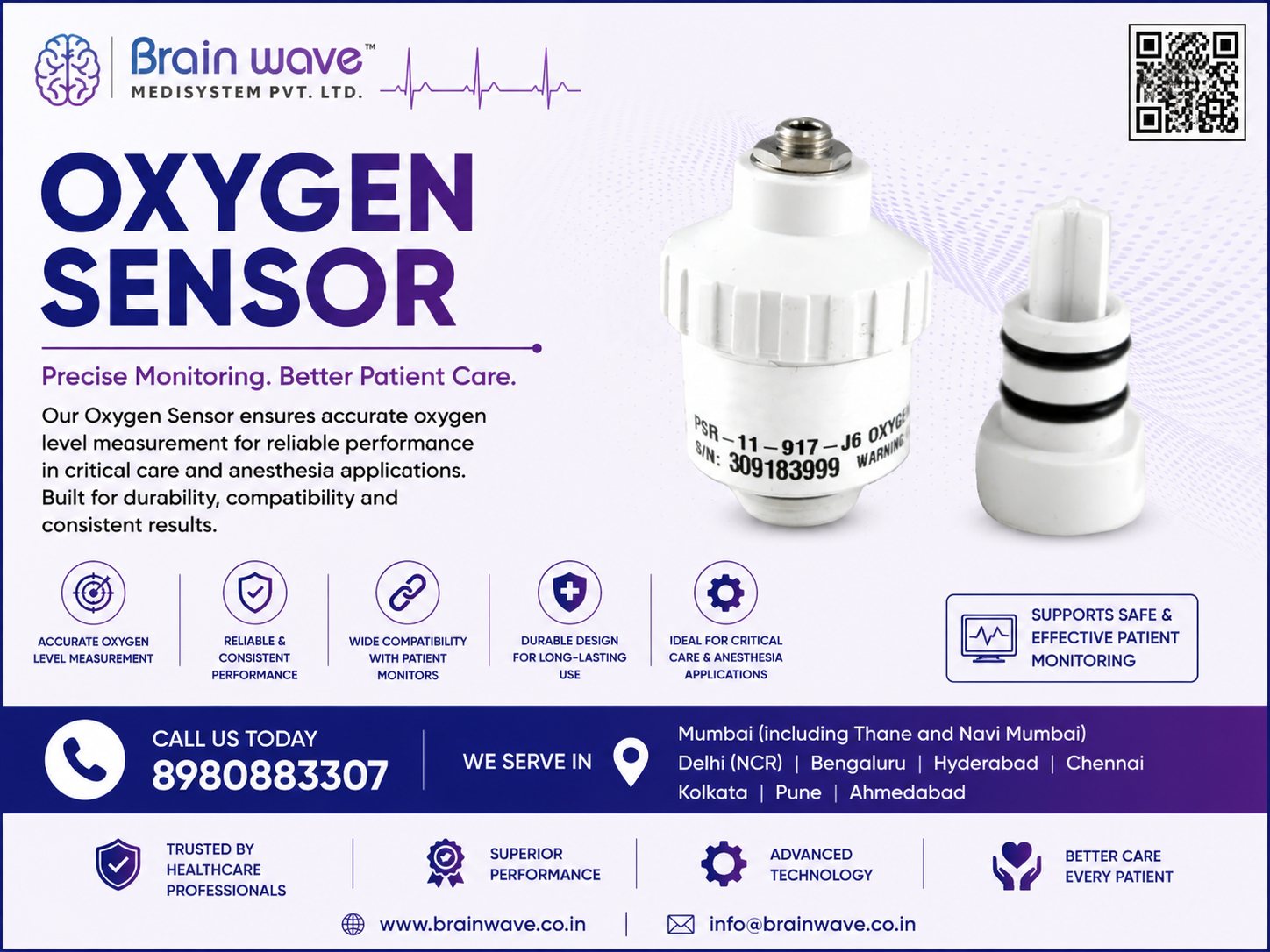
The oxygen sensor shown in the supplied creative is presented as a component intended for critical-care and anesthesia applications. When selecting such a component, healthcare facilities should consider the equipment’s intended application, manufacturer specifications, replacement schedule, compatibility requirements, and technical support availability.
A replacement sensor should also be installed by appropriately qualified personnel when required by the equipment manufacturer or healthcare facility’s maintenance procedures.
Understanding Oxygen Sensor Replacement
Like many medical-equipment components, oxygen sensors may require replacement after their specified service life or when their performance no longer meets the requirements of the compatible equipment. The actual replacement interval depends on the sensor technology, medical device, operating environment, usage conditions, and manufacturer’s recommendations.
Healthcare facilities should avoid replacing an oxygen sensor solely because another model appears physically similar. The replacement should match the required technical specifications and compatibility criteria. After installation, the medical equipment may also require appropriate verification, calibration, or functional testing according to the manufacturer’s service documentation.
This is especially important for anesthesia and respiratory equipment, where sensor functionality forms part of a broader monitoring system.
Signs That a Sensor May Require Attention
Medical equipment operators and biomedical engineers may encounter situations where an oxygen sensor needs inspection or replacement. Depending on the equipment, possible indicators can include abnormal oxygen readings, sensor-related alarms, calibration problems, equipment error messages, or failure to achieve expected monitoring performance.
However, these symptoms do not necessarily mean that the sensor itself is defective. Problems can also originate from connectors, cables, equipment electronics, environmental conditions, calibration procedures, or other components. Troubleshooting should therefore follow the medical device manufacturer’s service instructions rather than assuming that the oxygen cell is the cause.
Importance of Proper Installation
Correct installation is essential for any medical-equipment sensor. A compatible oxygen sensor should be installed according to the relevant equipment manufacturer’s instructions. Improper installation, incorrect connectors, damaged components, or failure to complete required calibration procedures can affect equipment performance.
For healthcare institutions, installation and servicing should be handled by appropriately trained biomedical engineering or technical personnel. Brain Wave states that it provides installation assistance, product demonstrations, staff training, technical support, servicing, and maintenance support for its medical equipment.
Durable Design for Healthcare Environments
Medical accessories used in hospitals and clinical environments need to withstand practical operating conditions while maintaining their intended functionality. Durability, appropriate construction, packaging, and correct storage can all contribute to the useful service life of an oxygen sensor.
Brain Wave’s Oxygen Sensor listings provide product information such as packaging type, packaging unit, category, and warranty. For example, the company’s O2 Cell for Drager and O2 Cell for Datex Ohmeda listings identify them as Oxygen Sensors, supplied in box packaging with a stated packaging unit of one and a 12-month warranty.
Choosing the Right Medical Oxygen Sensor
Before purchasing an oxygen sensor, hospitals and biomedical departments should evaluate several important factors. The medical equipment manufacturer and model should be confirmed first. The sensor’s connector and technical specifications should then be checked against the equipment requirements. Healthcare facilities should also consider the sensor’s intended application, warranty, availability, supplier support, replacement procedure, and any calibration or verification requirements.
A good supplier should be able to provide relevant compatibility information rather than simply supplying a generic component. Brain Wave’s product listings provide compatibility information for individual oxygen cells, helping buyers identify the equipment models for which specific sensors are intended.
Brain Wave Medisystem for Medical Equipment Accessories
Brain Wave Medisystem Pvt. Ltd. offers a broad portfolio of medical equipment and hospital accessories. Its Company Catalog includes categories covering oxygen sensors, flow sensors, ECG accessories, ECG cables, anesthesia and ventilator circuits, laryngoscopes, NIBP accessories, respiratory-care products, and SpO2 accessories.
The company also offers a wider range of hospital equipment, including patient monitors, oxygen concentrators, pulse oximeters, ECG machines, infusion pumps, defibrillators, fetal monitors, CPAP/BiPAP devices, and other healthcare equipment.
Its website highlights nationwide shipping, customer support, a wide product range, and technical assistance. The FAQ section states that Brain Wave provides installation and training support as well as technical servicing and maintenance.
Conclusion
A medical oxygen sensor is a small but important component within compatible medical monitoring and respiratory equipment. Accurate oxygen measurement can support the monitoring functionality of anesthesia and critical-care systems, making correct sensor selection and maintenance important for healthcare facilities.
The most important consideration when replacing an oxygen sensor is compatibility. Healthcare professionals, biomedical engineers, and procurement teams should verify the exact medical equipment model, technical specifications, connector configuration, manufacturer requirements, and service procedures before purchasing a replacement. Proper installation, calibration or verification where required, and routine equipment maintenance should also be followed.
Brain Wave Medisystem provides oxygen sensors and compatible O2 cell solutions as part of its broader range of hospital equipment accessories. With product-specific compatibility information and technical support services, the company can assist healthcare institutions in sourcing medical equipment components suited to their operational requirements.